








Neonatal General
Session: Neonatal General 9

Sarah T. Wu (she/her/hers)
Medical Student
McGill University Faculty of Medicine and Health Sciences
Pointe-Claire, Quebec, Canada
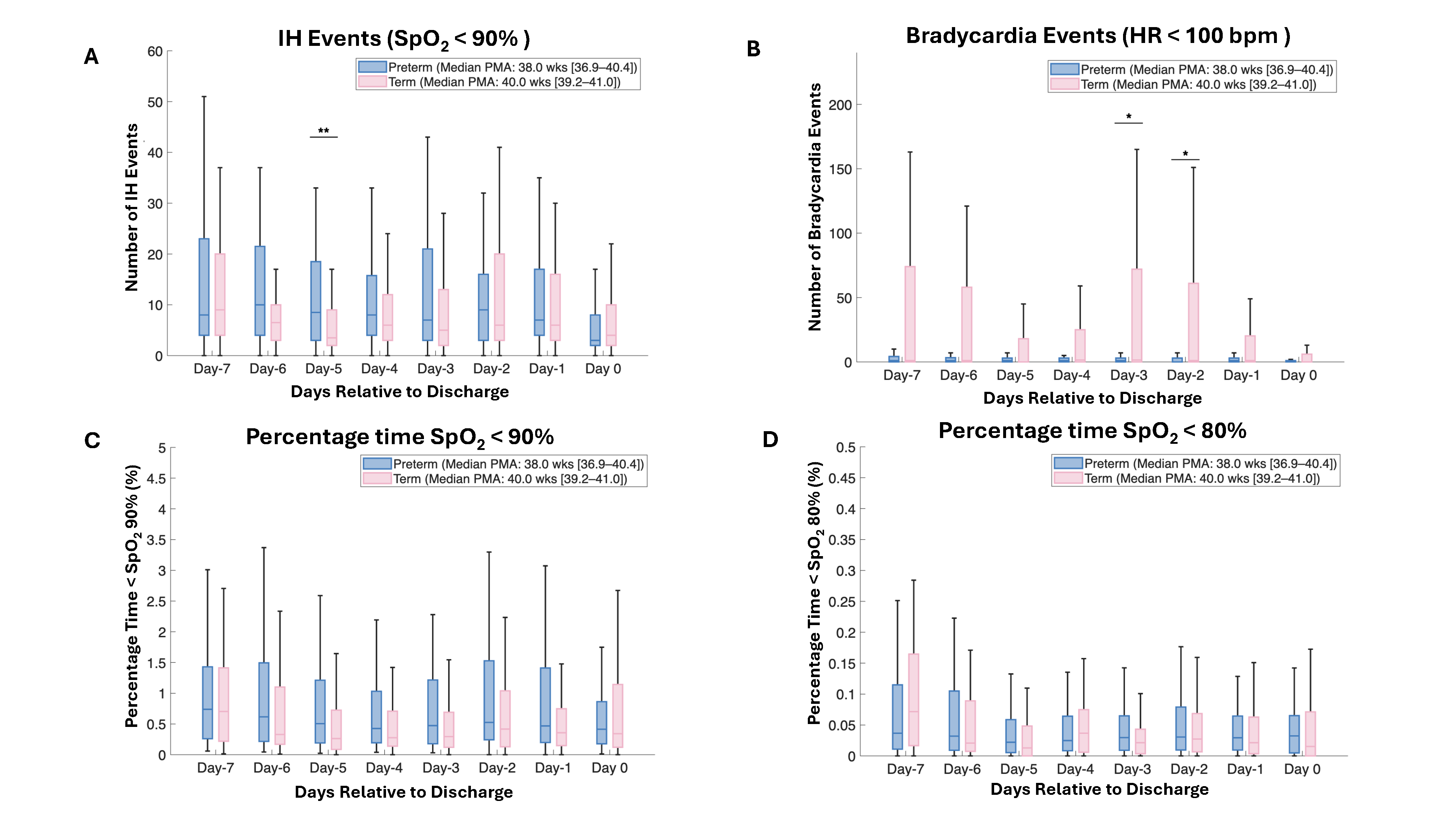 Daily distribution of events over the week preceding discharge for preterm (N= 63, median PMA = 38.0 wks [36.9 - 40.4]) and term infants (N = 136, median PMA = 40.0 wks [39.2-41.0]). (A) the number of IH events (SpO₂ < 90%), (B) the number of bradycardia events (HR < 100 bpm), (C) the percentage of time spent with SpO₂ < 90%, and (D) the percentage of time spent with SpO₂ < 80%.
 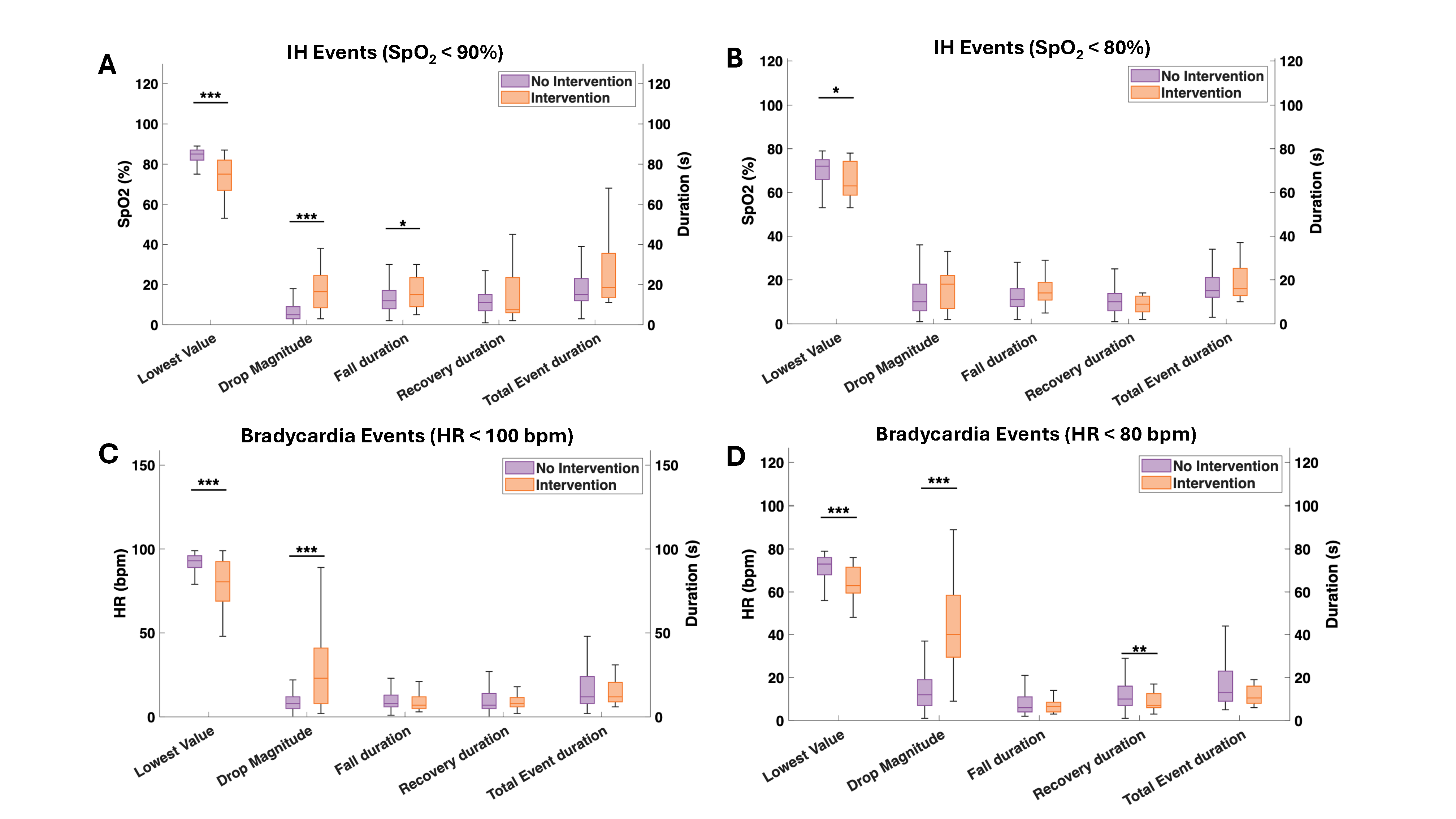 (A) IH events with SpO2 < 90% (B) IH events with SpO2 < 80% (C) bradycardia events with HR < 100 bpm, and (D) bradycardia events with HR < 80 bpm. The lowest value refers to the minimum SpO₂ or HR reached during an event. Drop magnitude is the difference between the last normal value (SpO₂ ≥ 90% or ≥ 80%; HR ≥100 bpm or ≥80 bpm, respectively) and the lowest value. Fall duration is the elapsed time from the last normal value to the previous occurrence of the lowest value, and recovery duration is the elapsed time from the first occurrence of the lowest value to the first subsequent normal value. Total event duration spans from the last normal value before the fall to the first normal value after recovery.
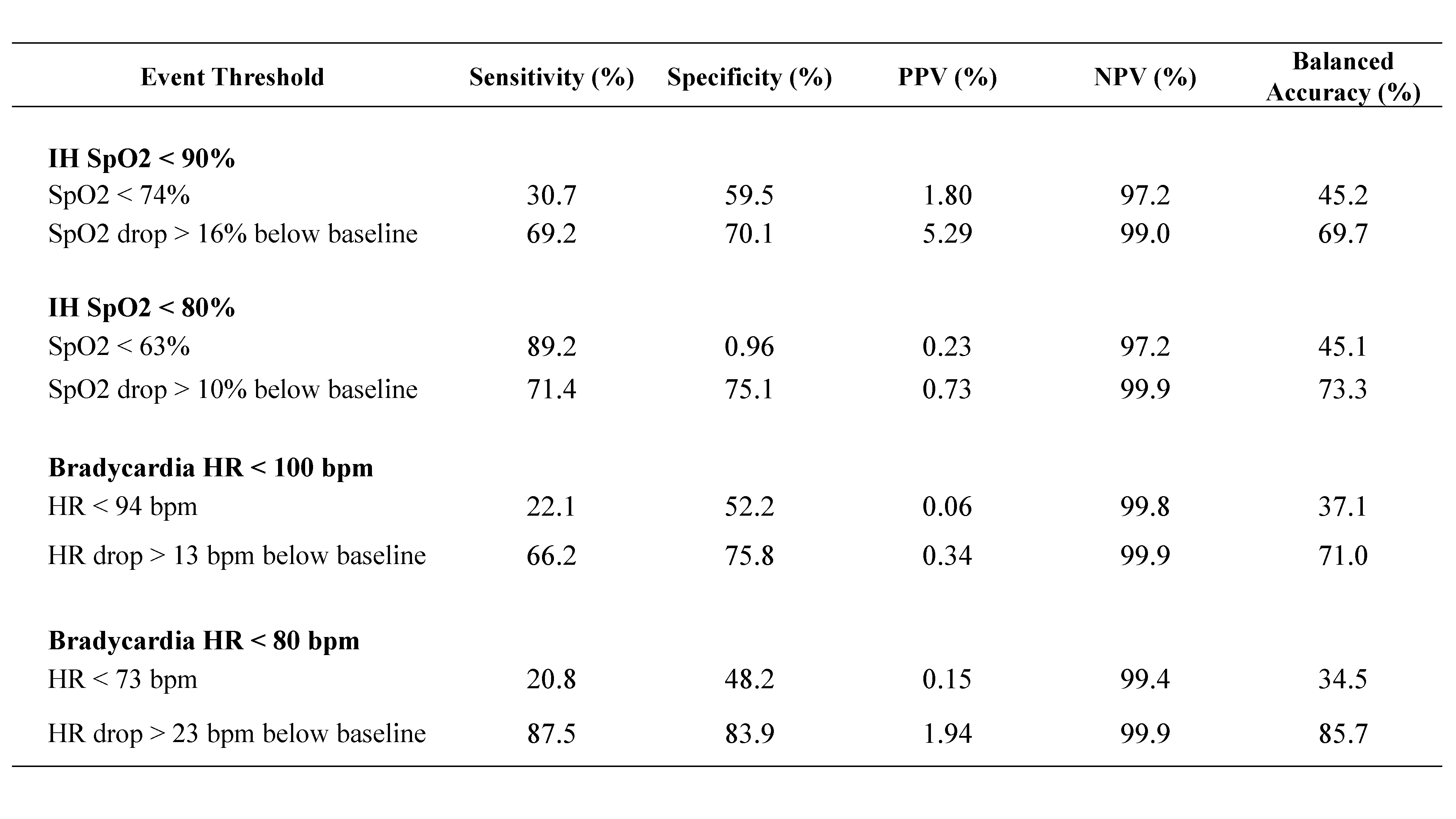 Thresholds indicate the optimal cutoff for each event, determined through Youden's J characteristic. Performance metrics include sensitivity (true positive rate), specificity (true negative rate), positive predictive value (PPV), negative predictive value (NPV), and balanced accuracy (average of sensitivity and specificity). Event types include IH with SpO₂ < 90% and < 80%, and bradycardia with HR < 100 bpm and < 80 bpm.