








Genomics/Epigenomics
Session: Genomics/Epigenomics 1
Marissa Chow, B.S. (she/her/hers)
Clinical Research Coordinator
Floating Hospital for Children at Tufts Medical Center
Boston, Massachusetts, United States
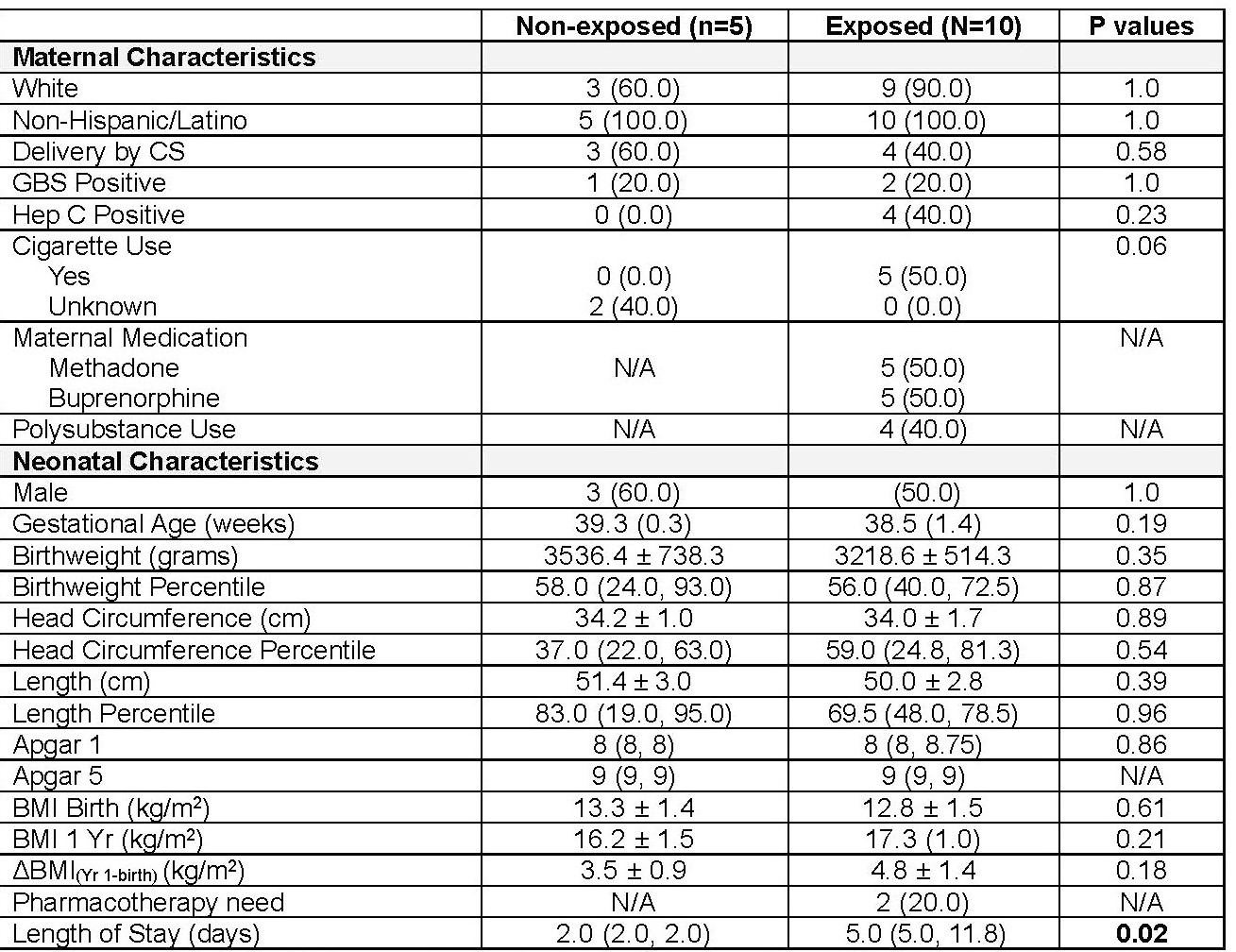 CS: cesarean section, GBS: group B streptococcus, Hep: hepatitis, BMI: body mass index, Yr: year. Data are presented as mean ± standard deviation or median (interquartile range) for continuous measures, and N(%) for categorical measures. Bolded p values indicate significance.
 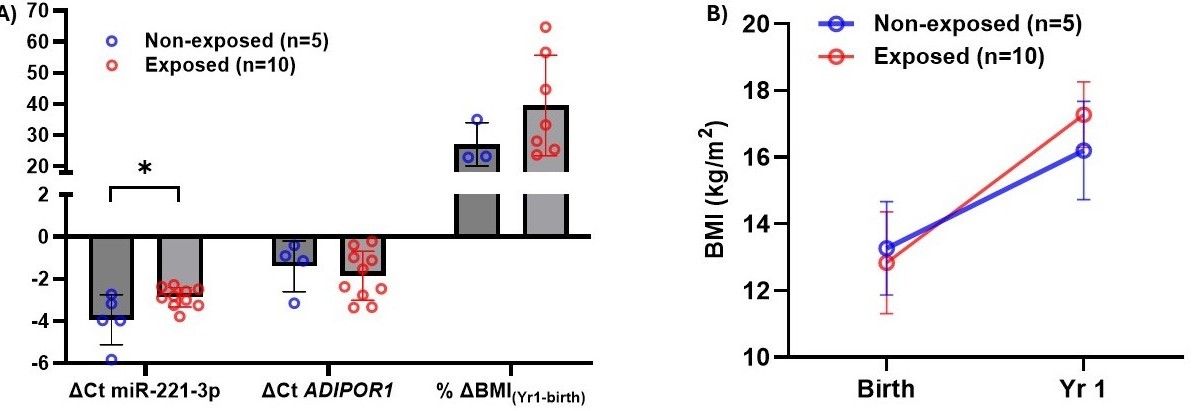 The level of miR-221-3p (regulator of adiposity through its action on adiponectin signaling) was significantly higher in the opioid-exposed group (panel A, left). Higher miR-221-3p was accompanied by a lower (albeit comparable) expression of ADIPOR1 (panel A, middle) and a greater percentage of BMI change at one year in opioid-exposed neonates (panel A, right). Although starting with a lower BMI at birth, opioid-exposed neonates had a higher BMI by one year of age (panel B). *p < 0.05, Δ=delta, Ct=threshold cycle, ADIPOR1=adiponectin receptor 1, BMI=body mass index, Yr=year.