363 - Pandemic effect on all-cause pediatric inpatient mortality
Monday, April 27, 2026
8:00am - 10:00am ET
Publication Number: 4356.363
Yevgeniya Harrington, Boston Children's Hospital, Boston, MA, United States; Daniel A. Rauch, Hackensack Meridian School of Medicine, Hackensack, NJ, United States; Gregory Ison, JSUMC K Hovnanian Children's Hospital, Parlin, NJ, United States; Jana C. Leary, Boston Children's Hospital, Waban, MA, United States
Pediatric Hospitalist Boston Children's Hospital Boston, Massachusetts, United States
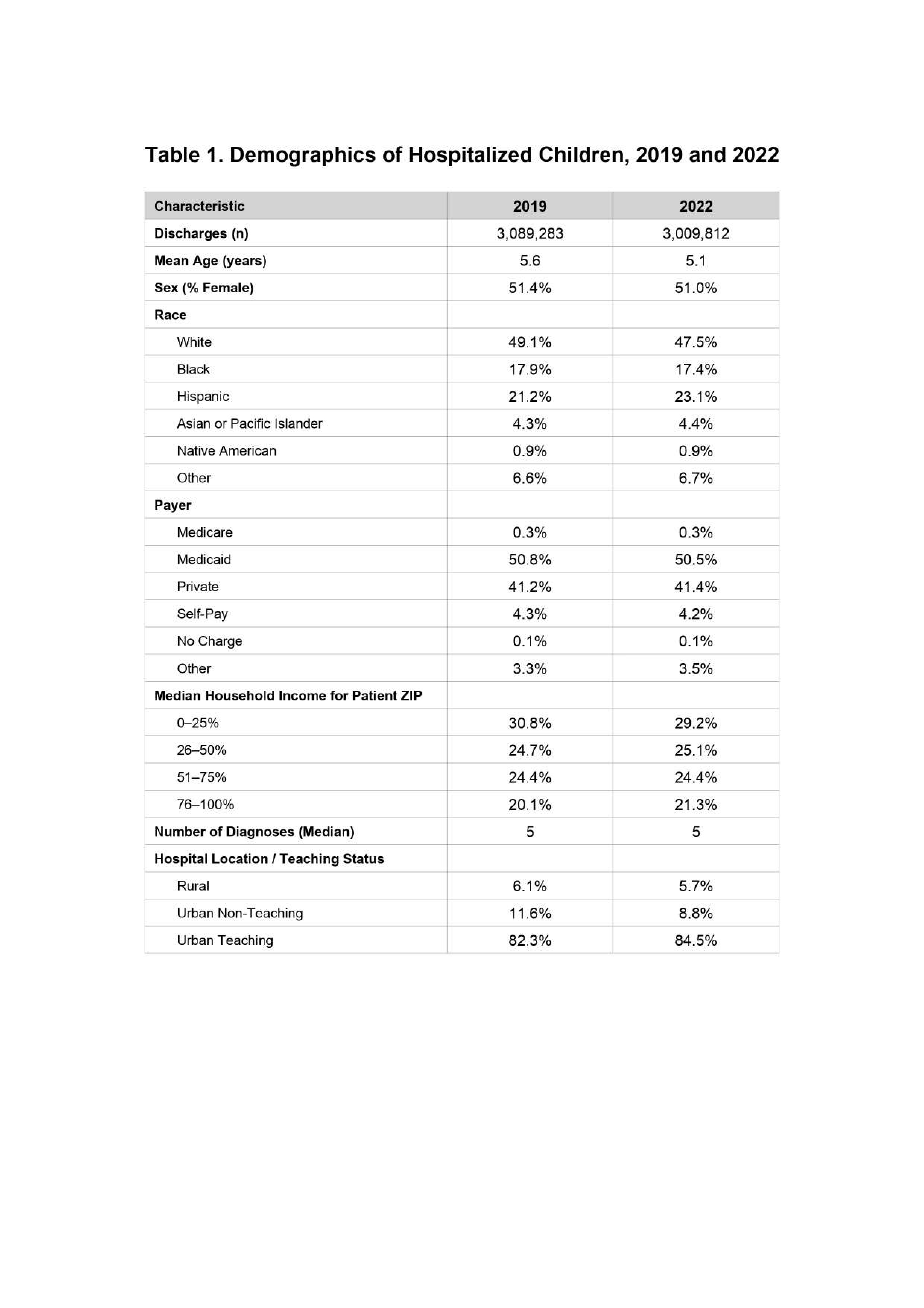
Background: The COVID pandemic served as a seismic disruption to health care. The disease mortality itself decreased life expectancy in the US. Overwhelmed hospitals were forced to prioritize inpatient care of adults, and lockdowns disrupted access to ambulatory services. Children with medical complexity, who are a large percentage of pediatric inpatient bed days, were disproportionately impacted by this. We hypothesized that the impact of COVID on pediatric care would increase all-cause pediatric inpatient mortality. Objective: To compare all-cause pediatric inpatient mortality in the year before the COVID pandemic vs. in 2022. Design/Methods: We used the 2019 and 2022 Kids' Inpatient Database (KID) from the Agency for Healthcare Research and Quality, the largest all-payer pediatric inpatient care database. We used descriptive statistics to describe patient demographic and hospital characteristics for all discharges by year. We then combined all discharges from both years and performed logistic regression to compare all-cause mortality in 2019 vs. 2022 while adjusting for age, sex, race, payer, median income by zip code, hospital location/teaching status, and number of diagnoses. Results: There were 3,089,283 discharges in the 2019 KID and 3,009,812 in 2022. Patients had a mean age of 5 years, were 51% female, 48.3% White, 51% with public insurance, and had a median of 5 diagnoses. 83.4% were hospitalized at Urban teaching hospitals. All-cause mortality for pediatric inpatients was higher in 2019 than in 2022, with an odds ratio of 1.18, p< 0.001.
Conclusion(s): All-cause pediatric inpatient mortality was modestly lower in 2022 compared to 2019, despite the profound disruptions of the COVID-19 pandemic. This decline may reflect social and public health changes during and after the pandemic period. Expanded child tax credits and related social support systems may have lifted families out of poverty, reducing health risks associated with unmet social needs. Additionally, decreased exposure to accidental trauma and reduced circulation of contagious illnesses due to lockdowns and infection-prevention measures may have contributed to lower inpatient mortality in 2022.
Demographics of Hospitalized Children, 2019 and 2022