531 - The Power of Positive Parenting: Using Puppets in Primary Care to Support Family Home Engagement
Monday, April 27, 2026
8:00am - 10:00am ET
Publication Number: 4519.531
Gretchen Domek, University of Colorado School of Medicine, Aurora, CO, United States; Mariah Horvath, University of Colorado School of Medicine, Aurora, CO, United States; Mariarosa G. Gasbarro, University of Colorado - Anschutz, Aurora, CO, United States; Lori Silveira, University of Colorado Anschutz, Elizabeth, CO, United States
Associate Professor University of Colorado School of Medicine Aurora, Colorado, United States
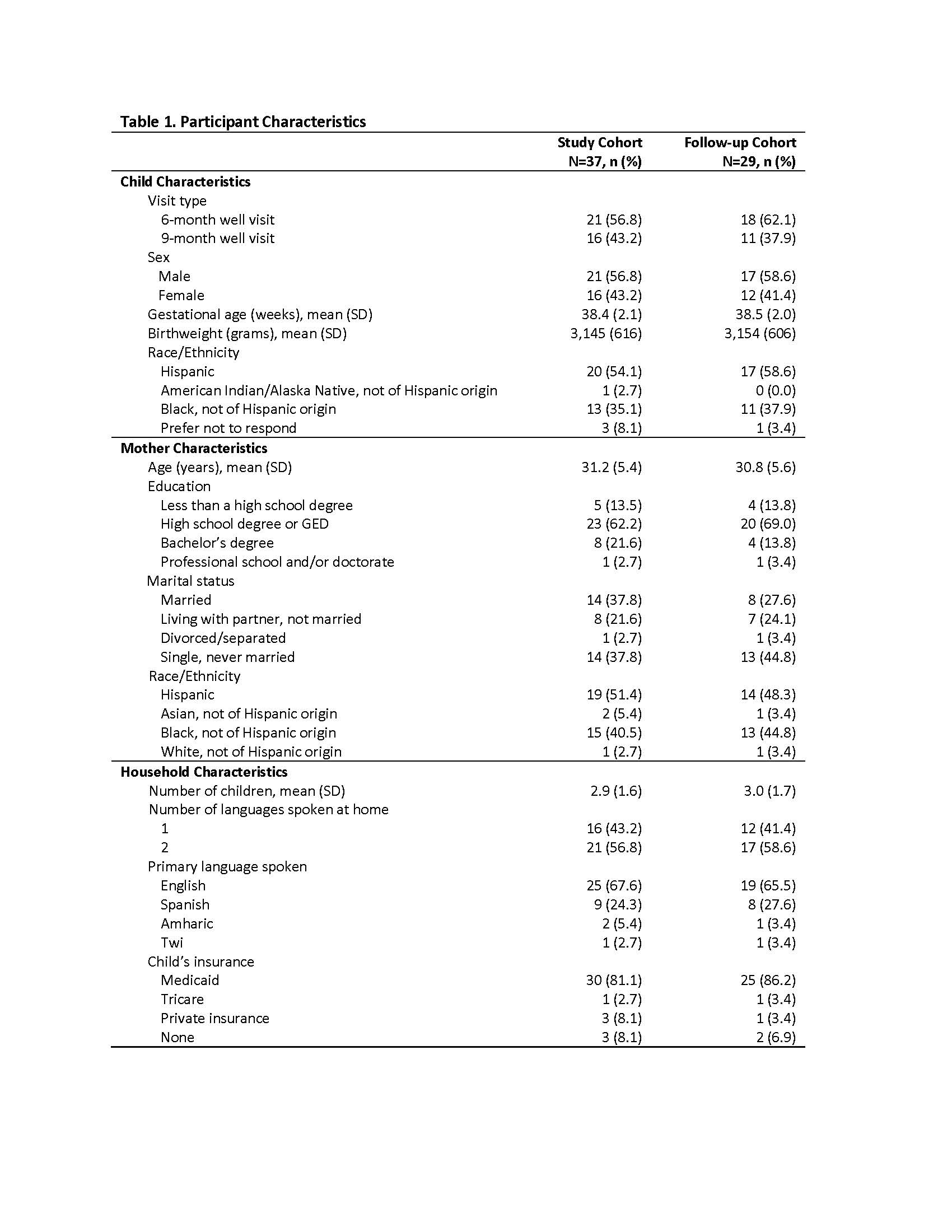
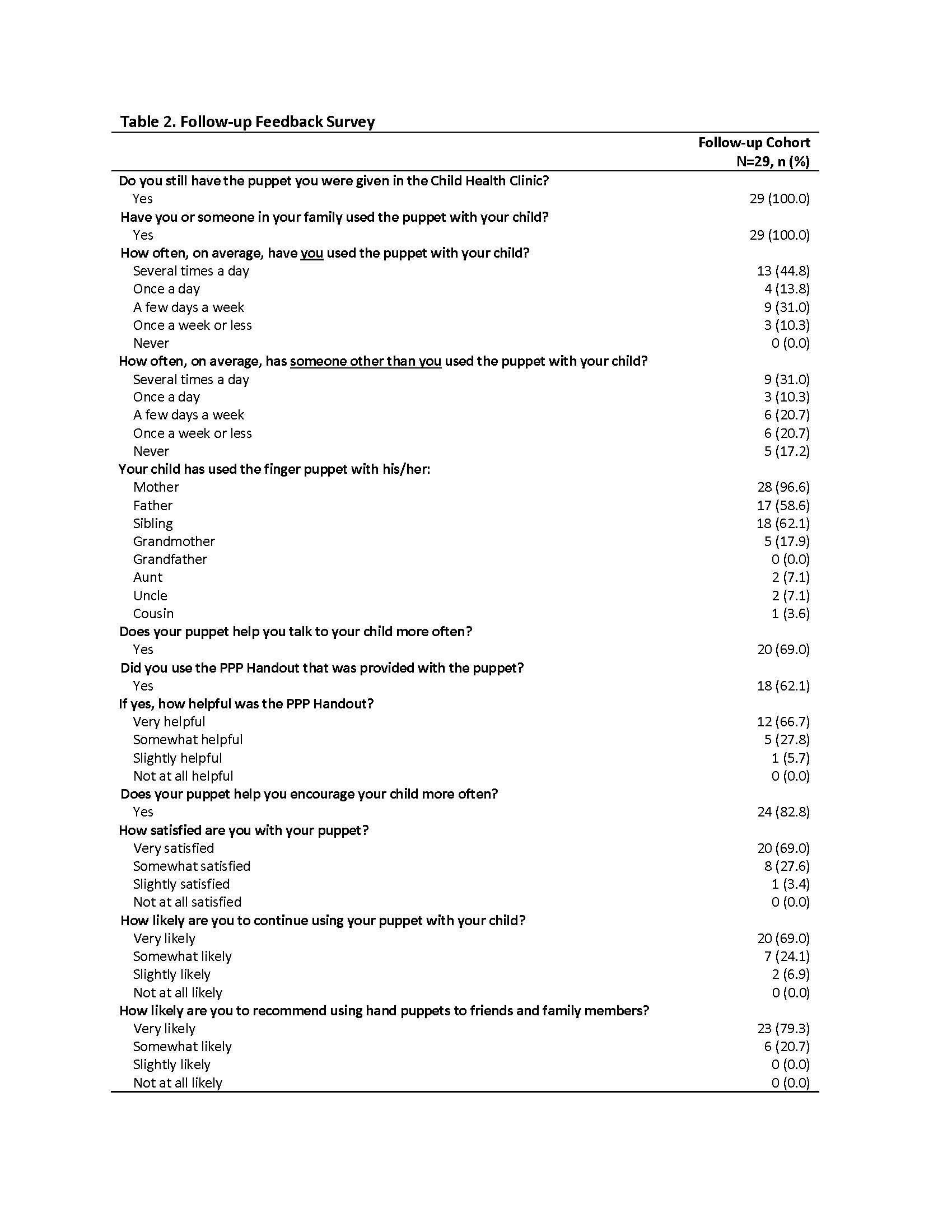
Background: Research shows that increasing home exposure to positive parenting practices improves child behavior and development, and yet few low-cost, high-reach interventions exist, especially starting in infancy. Pediatric primary care provides an important venue for embedding such a wide-reaching early developmental and parenting intervention. Objective: We explored the feasibility and acceptability of introducing hand puppets during infant well visits to promote positive parenting practices. Design/Methods: This pilot study was conducted at a university-affiliated primary care clinic and included English-speaking families presenting for the 6- or 9-month well visit. All caregivers completed an intake survey and were given a puppet and accompanying handout with positive parenting examples related to feeding, diaper changes, dressing, bathing, and playing. Caregivers were contacted for a 1-month follow-up telephone survey. Primary outcomes were related to feasibility and acceptability. For secondary outcomes, pre-post changes to caregiver child development knowledge (SPEAK-CAT) and parent-child interactions (BRIGANCE Parent-Child Interaction Scale, BPCIS) were compared using paired t-tests of mean differences. Results: Of 89 families screened during well visits, 51 (57%) were eligible and 37 (73%) enrolled, including 32 mothers, 4 fathers, and 1 grandmother. Most caregivers (78%) completed follow-up, with a majority of children identified as black (38%) or Hispanic (59%) and on Medicaid (86%). (Table 1) All families used the puppet, with the participating caregiver (59%) or another family member (41%) using it at least daily. A mean of 2.8 (SD 1.2) family members used the puppet, including the mother (97%), father (59%), sibling (62%), grandmother (18%), aunt (7%), uncle (7%), and cousin (4%). Most families said the puppet helped them talk with (69%) and encourage (83%) their child more often, with almost all participants very/somewhat satisfied with the puppet (97%), very/somewhat likely to continue using the puppet (93%), and very/somewhat likely to recommend puppets (100%). (Table 2) Caregivers described several positive experiences using the puppets with their children. (Figure 1) For secondary outcomes, there were no significant changes in the pre-post SPEAK-CAT (54.0 vs. 56.5, p=0.7) or BPCIS (31.9 vs. 32.2, p=0.6) scores.
Conclusion(s): Our Power of Positive Parenting intervention was feasible and acceptable to disseminate through primary care infant well visits with high parental satisfaction. The hand puppet was especially accessible, with a wide variety of family members using it in the home environment.










.jpg)
