448 - To Admit or Not to Admit: Age as a risk factor for apnea in pediatric RSV patients
Monday, April 27, 2026
8:00am - 10:00am ET
Publication Number: 4439.448
Jaryd Zummer, Kentucky Children's Hospital, Lexington, KY, United States; Elizabeth H. Blank, University of Kentucky College of Medicine, Walton, KY, United States; Davis M. Howell, University of Kentucky College of Medicine, Lexington, KY, United States; Vince Gouge, University of Kentucky College of Medicine, Lexington, KY, United States; Regan A. Baum, University of Kentucky HealthCare, Lexington, KY, United States; Yana Feygin, University of Kentucky College of Medicine, Prospect, KY, United States; Megan E. Hall, University of Kentucky, Lexington, KY, United States
Associate Professor of Pediatric Emergency Medicine Golisano Children's Hospital at UK Lexington, Kentucky, United States
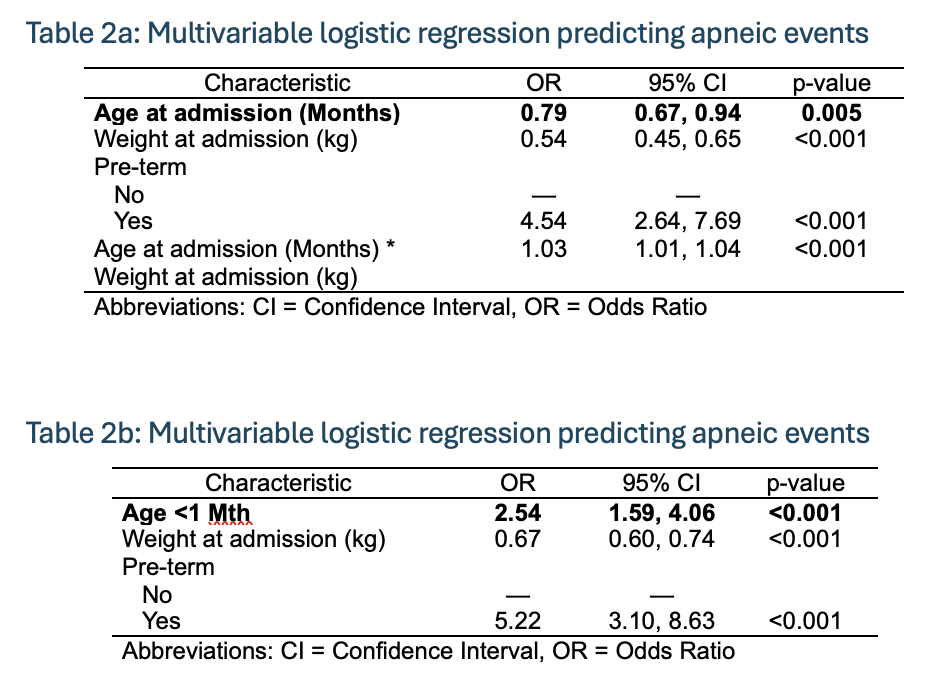
Background: Standard management in many emergency departments is to admit all patients younger than 1 month who test positive for RSV. This practice is based on a perceived increase risk of apnea in this age group, regardless of clinical condition or symptoms. Recent evidence questions this notion. This study aims to evaluate whether age is an independent risk factor for apnea in RSV-positive pediatric patients and determine if all such patients require hospitalization. Objective: The primary objective of our study is to determine whether age is an independent risk factor for RSV-associated apnea. Design/Methods: This study is a retrospective review of patients less than 24 months old who presented to University of Kentucky Children's Hospital emergency department with RSV infection from June 2021 to September 2024. Demographic and clinical characteristics including age, prematurity, hospital admission and LOS, respiratory support, and apnea incidence were collected. Medians and quartiles were compared using Wilcoxon rank sum tests, while proportions were compared using either Chi-squared test or Fisher's exact test. A logistic regression was performed to assess the effect of age on apnea, controlling for prematurity and weight. Odds ratios are presented, along with 95% confidence intervals and p-values. Results: Overall 2809 patients presented with RSV during the study period, with a median age of 6.3 months. 148 patients (5.3%) had at least one apneic event and was significantly associated with younger median age at presentation (1.6 vs 6.7 months), age < 1 month, and history of prematurity. There were no significant differences in Bronchiolitis scores in patients with and without apneic events. High rates of hospital admission were seen in our cohort (40% overall), including 89% of patients with apnea, those of whom had a median LOS of 3.7 days. Patients with apnea had increases in all forms of respiratory support, including supplemental oxygen, HFNC, PPV, and intubation. Age < 1 month was associated with higher odds of apnea (OR=2.54, 95% CI=1.59, 4.06, p< 0.001), controlling for prematurity and weight. The study's retrospective design may not account for potential confounders, including certain patient co-morbidities. As only RSV-positive cases were included, findings may not generalize to other bronchiolitis or apnea etiologies.
Conclusion(s): Younger age at presentation and prematurity remain important risk factors for apnea in RSV patients. Prospective studies are needed to validate these findings, but a conservative management approach should be considered in this high-risk patient population.










.png)