Session: Medical Education 10: Simulation and Technology I
154 - Rapid Cycle Deliberate Practice: A Teaching Method to Improve Retention of NRP Knowledge and Skills
Monday, April 27, 2026
8:00am - 10:00am ET
Publication Number: 4151.154
Mugil V. Shanmugam, Keck School of Medicine of the University of Southern California, Oak Park, CA, United States; Kathleen Tedesco, Keck School of Medicine of the University of Southern California, Los Angeles, CA, United States; Manoj Biniwale, Cedars Sinai Medical Center, Los Angeles, CA, United States; Fiona AGM. Wertheimer, Keck School of Medicine of the University of Southern California, Los Angeles, CA, United States
Undergraduate Student Keck School of Medicine of the University of Southern California Oak Park, California, United States
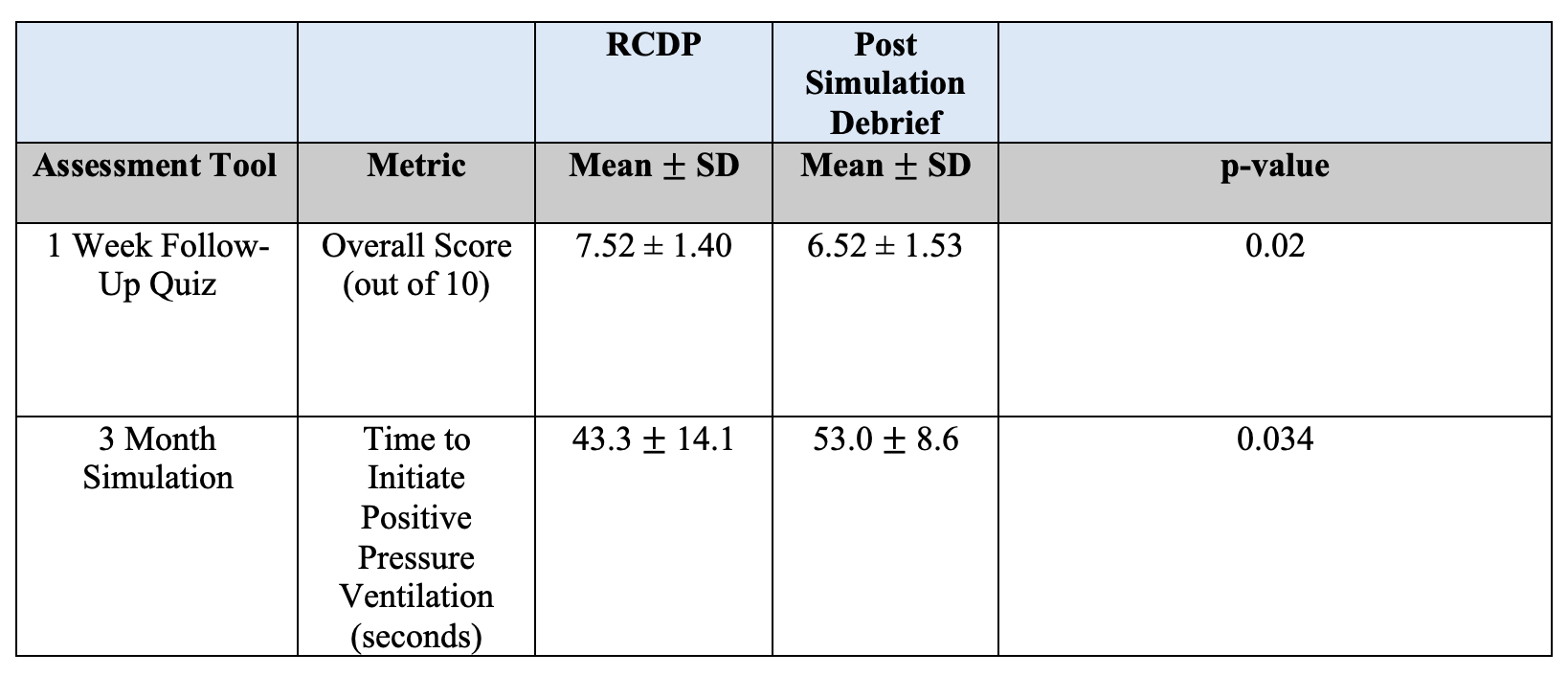
Background: Neonatal resuscitation skills are valuable for Emergency Medicine providers when faced with high-risk deliveries. Standard practice for Neonatal Resuscitation Program (NRP) training is to provide post-simulation debriefing, however, Rapid Cycle Deliberate Practice (RCDP) may be beneficial when training motivated learners. This technique employs multiple iterations of practice and feedback to emphasize key takeaways. Objective: We compared NRP training for Emergency Medicine residents using RCDP against post-simulation debriefing to identify which method is more effective for retention of NRP knowledge and skills over time. Design/Methods: Emergency Medicine residents with no prior NRP certification at a Level 1 Trauma Center were enrolled in this study. Participants were randomly assigned to a control group receiving standard NRP post-simulation debriefing or the intervention RCDP group, stratifying for year of training. Participants completed a pre-survey, the online NRP 8th Edition training module, in-person NRP simulation with debriefing or RCDP, and a post-survey. Retention of knowledge and skills was evaluated by a one-week follow-up quiz, 3-month follow-up quiz with simulation assessment, and 6-month follow-up quiz with simulation assessment. All quizzes were based on 8th Edition NRP Principles. Differences by group were analyzed using Fisher's Exact test and Wilcoxon Rank Sum test. Results: 54 of 71 (76.1%) total participants completed the one-week follow-up quiz, 43 participants (60.6%) completed the 3-month follow-up quiz, and 22 participants (31.0%) completed the 3-month simulation. The RCDP group received a significantly higher overall score on the one-week follow-up quiz (p < 0.05). They also performed significantly better than the control group in identifying the best method of heart rate assessment (p < 0.01). In the 3-month simulation, the RCDP group accurately identified a need for positive pressure ventilation (PPV) earlier (p < 0.05). No significant differences were observed for the 3-month quiz.
Conclusion(s): Results indicate that teaching NRP via RCDP is feasible and benefits both short and long term retention of NRP 8th Edition knowledge and skills. Better short-term retention of knowledge was achieved by the RCDP group as evidenced by the difference in the one-week follow-up quiz; better long-term retention of skills was demonstrated by the earlier initiation of PPV during simulation. Limitations of this study include participants taking quizzes in different environments as well as a small sample size. Data collection is continuing to see if these results persist at the 6-month follow-up.
Table 1. Significant Results by Group
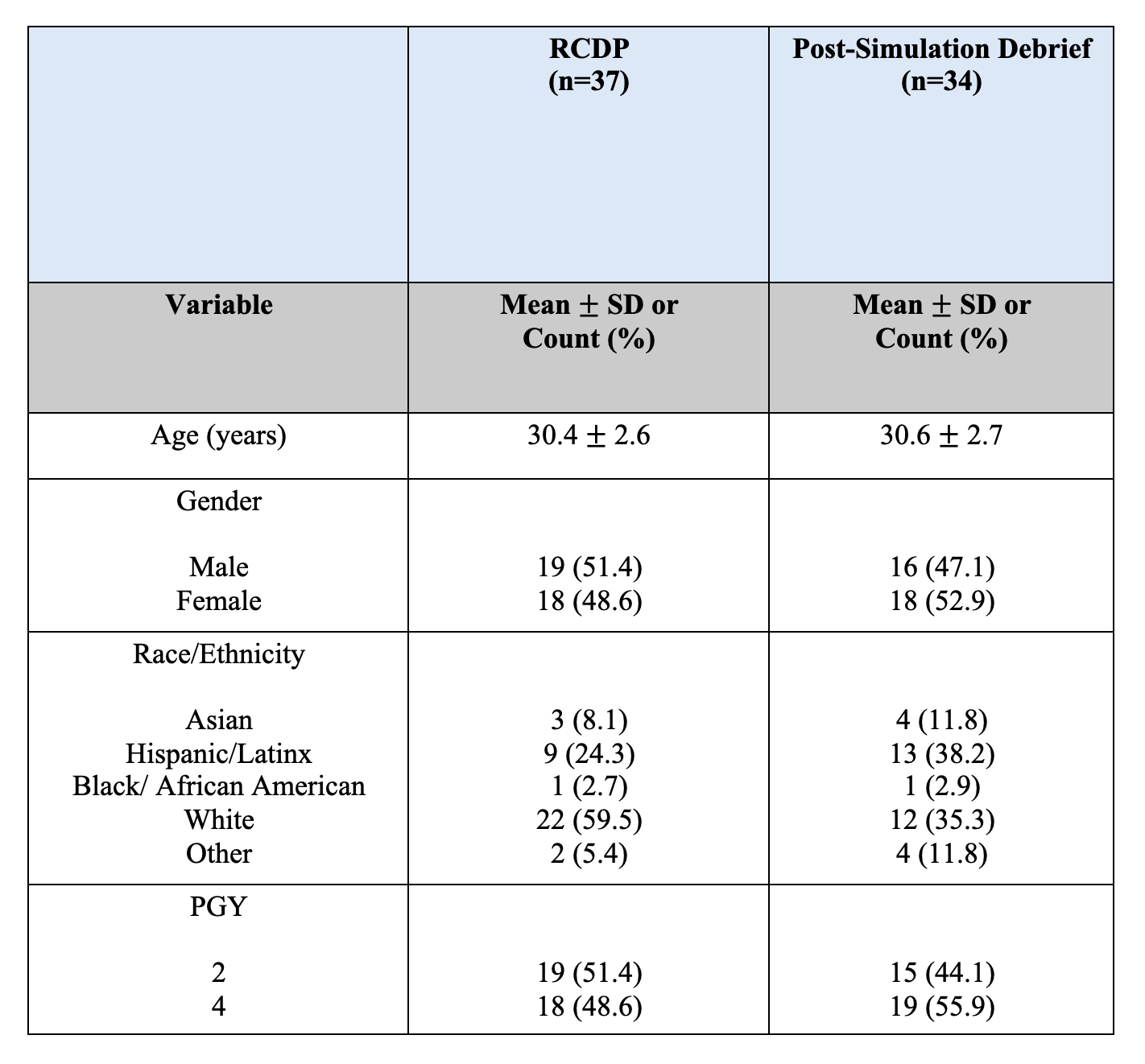
Table 2. Demographics of the n=71 Pre-Survey Respondents