486 - Books as Clinical Tools: Enhancing Well Child Visits and Supporting Families
Monday, April 27, 2026
8:00am - 10:00am ET
Publication Number: 4477.486
Elizabeth Erickson, Duke University School of Medicine, Durham, NC, United States; Ellen Stevenson, Doernbecher Children's Hospital at Oregon Health & Science University, Portland, OR, United States; Marny Dunlap, University of Oklahoma College of Medicine, Oklahoma City, OK, United States; Mariana Glusman, Ann & Robert H. Lurie Children's Hospital of Chicago, Chicago, IL, United States; Usha Ramachandran, Rutgers, Robert Wood Johnson Medical School, New Brunswick, NJ, United States; Nikki Shearman, Reach Out and Read, Newton, MA, United States; Anna Miller-Fitzwater, Atrium Health Wake Forest, Winston-Salem, NC, United States
Assistant Professor Duke University School of Medicine Durham, North Carolina, United States
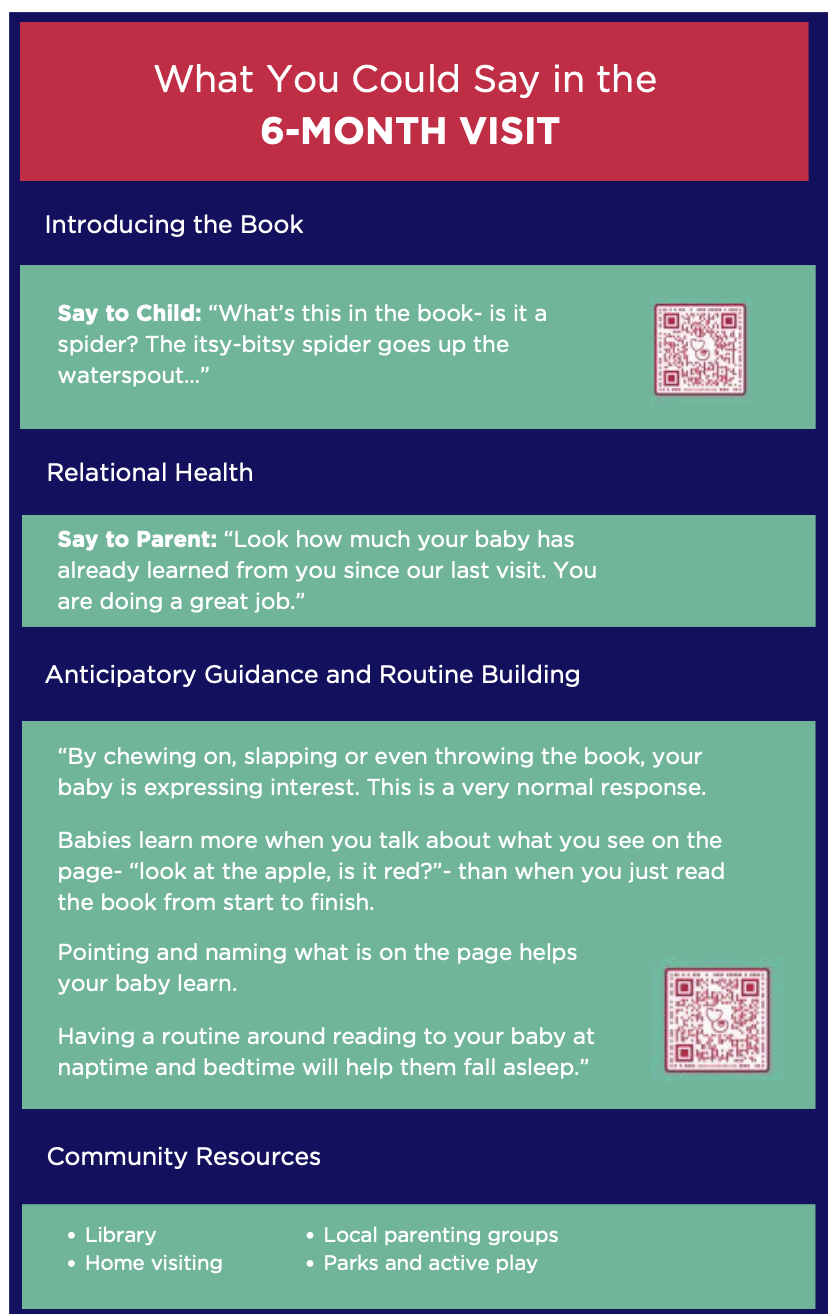
Background: The American Academy of Pediatrics (AAP) emphasizes the importance of literacy promotion in pediatric care starting at birth to promote positive language-rich interaction and strengthen relationships. Reach Out and Read (ROR) is an AAP endorsed, evidence-based strategy that uses books to facilitate well child visits, model developmentally appropriate ways to interact with childen using books and encourage parents to create joyful and nurturing reading routines. Annual surveys show that ROR clinicians give out books and encourage families to read with their children but need more support to fully utilize the strengths of the ROR model. Objective: Develop a new tool to increase high quality delivery of the ROR model, better integrate books into well child visits, and implement Bright Futures recommendations. Design/Methods: The ROR Curriculum Development Working Group, consisting of ROR clinicians (predominantly academic pediatricians) reviewed a "crosswalk" of Bright Futures Recommendations and ROR guidance to create a visit-by-visit outline of how to incorporate books into the different aspects of the well-child visit including: introduction and history taking, modeling, developmental surveillance and the physical exam, promoting relational health, providing anticipatory guidance, and offering community resources. With clinician and parent advocate input, content was created, curated, and then reviewed by a variety of early literacy communities, including a resident advocacy group, the Reach Out and Read Colorado medical advisory board, and the Academic Pediatric Association Literacy Development Programs in Primary Care Special Interest Group. Results: After several design iterations, a booklet incorporating new guidance and strategies was developed. The booklet serves as a teaching tool and quick reference for busy clinicians to facilitate high quality delivery of the ROR model and Bright Futures guidelines within well-child visits. The booklet aligns with each well visit age, outlines specific ways to efficiently incorporate the book into a visit, and includes links to very brief videos that model techniques for each age. Next steps include evaluation for impact and efficacy.
Conclusion(s): We created an easy-to-use tool to harness the full potential of the proven and strengths-based ROR model in accomplishing Bright Futures priorities. While this tool was developed with residency education in mind, it can also be used in new ROR clinics and as a tool to improve quality in existing clinics, thereby enhancing health and developmental promotion for young children and families.









.png)