585 - Evaluation of a Healthy Lifestyle Intervention Among School-Aged Children in an Urban School-Based Health Program
Monday, April 27, 2026
8:00am - 10:00am ET
Publication Number: 4573.585
Michelle Shankar, Children's Hospital at Montefiore Einstein, New York, NY, United States; Colleen Kelly, Montefiore School Health program, Bronx, NY, United States; Akanksha Rai, Montefiore Medical Center, Jersey city, NJ, United States; Angelic Rivera-Edwards, Montefiore School Health Program, Bronx, NY, United States; Rosy Chhabra, Montefiore Medical Center, Bronx, NY, United States
Healthy Lifestyle Initiative coach Montefiore School Health program Bronx, New York, United States
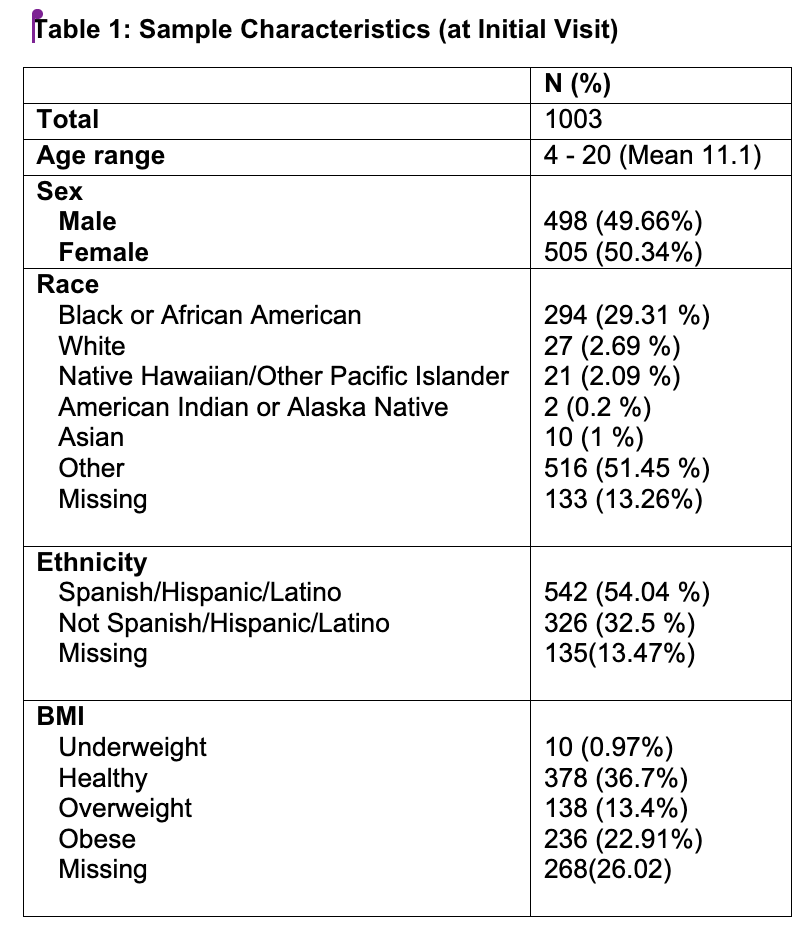
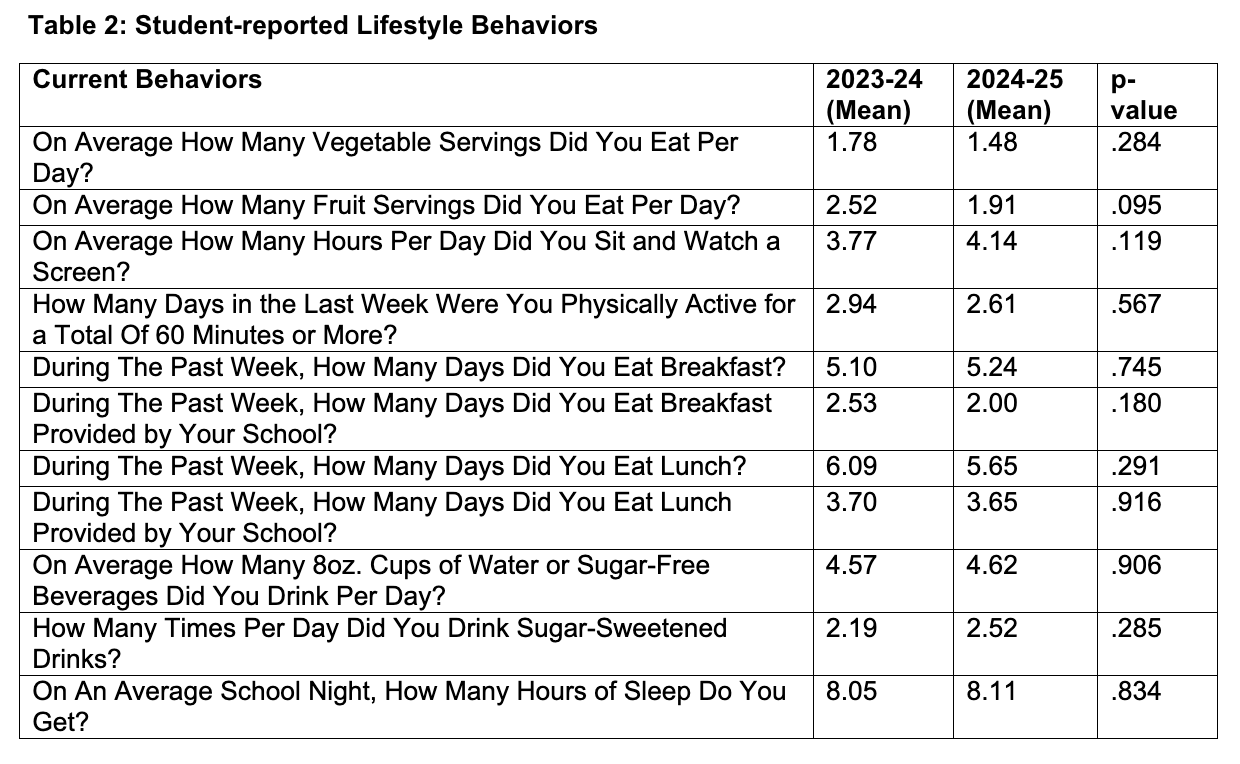
Background: The mission of school-based health centers (SBHCs) is to improve the health and well-being of students through accessible, high-quality health care. Montefiore School Health Program (MSHP) serves 40,000 students in 103 public schools via 35 SBHCs in the Bronx, NY. In 2023, MSHP launched the Healthy Lifestyles (HL) Initiative, an evidence-based intervention designed to improve behaviors related to nutrition, sleep, screen time, and physical activity. Objective: To evaluate changes in student-reported lifestyle behaviors among school children after receiving a school-based HL intervention. Design/Methods: Over a 2-year period (2023-2024 and 2024-2025 school years), students enrolled in MSHP received individual clinic visits with a school-based health provider to evaluate current health behaviors and provide counseling on developing healthy habits. The sample included students enrolled in elementary, middle, and high school MSHP clinics who had at least one documented stand-alone HL clinic visit during the intervention period. The primary outcome was student-reported lifestyle behaviors: at each HL visit, students completed an 11-item survey regarding current lifestyle behaviors related to nutrition, sleep, and physical activity. We conducted descriptive analyses and independent-samples t-tests to compare data from each school year. A two-sided p-value of 0.05 was considered to be statistically significant. Results: The sample included 1003 students aged 4 to 20 years (mean age 11.1 years), including 50% Female, 29% Black, 54% Hispanic, 13% Overweight, and 23% Obese (Table 1). Students averaged 1.2 visits (ranging from 1 to 9 visits) during the two-year period. There were no significant differences in reported lifestyle behaviors between the 2023-24 and 2024-25 school years (Table 2).
Conclusion(s): This project demonstrates the feasibility of an HL intervention in the school-based clinical setting. Study limitations include the low number of visits per student, student recall bias, and provider- and student-level variability in how visits were conducted. Our findings also reflect challenges of behavior change among school-aged children, whose lifestyle behaviors are influenced by multiple contextual factors in their social and physical environments. Given the AAP recommendation of 26 contact hours of intensive health behavior and lifestyle treatment (IHBLT) delivered over a 3- to 12-month period for children ages 6 and older with obesity, outcomes may be improved by increasing the number of contact hours with each student.