618 - Reduced Healthcare Costs Following Exome or Genome Sequencing in Pediatric Epilepsy: a SAVES-Kids Study
Monday, April 27, 2026
8:00am - 10:00am ET
Publication Number: 4605.618
Colton Frazer, GeneDx, St. Louis, MO, United States; Paul S. Kruszka, University of Virginia, Charlottesville, VA, United States; Olaf Bodamer, Boston Children's Hospital, Boston, MA, United States; Sarah Soto, GeneDx, Oakton, VA, United States; Krystal L. Brown, GeneDx, Gaithersburg, MD, United States; Patricia C. Lopes, GeneDx, Orange, CA, United States; Farah Pathan, Komodo Health, Milton, GA, United States; Pam Kumparatana, Komodo Health, Chicago, IL, United States; Xiyuan Wu, Komodo Health, Foster City, CA, United States; Aaron Mendelsohn, Elev8Evidence, Rockville, MD, United States; Britt Johnson, GeneDx, LLC, Fort Lauderdale, FL, United States
Senior HEOR Scientist GeneDx St. Louis, Missouri, United States
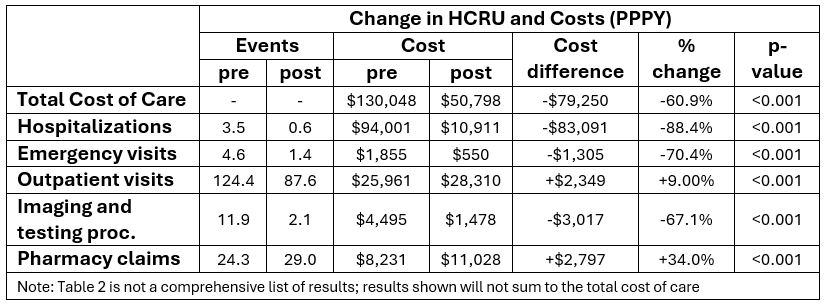
Background: Epilepsy is one of the most common neurological conditions and a frequent reason for pediatric emergency room visits. With 30% to 50% of epilepsy patients having a genetic etiology, precise molecular diagnoses from exome or genome sequencing (ES/GS) can enable personalized clinical management. These management changes are often associated with improved outcomes, ultimately reducing health care resource utilization (HCRU) and associated costs. However, the magnitude of benefit in these patients has not been broadly studied. Objective: Determine the cost and HCRU impact of outpatient ES/GS for a pediatric cohort with a clinical indication of seizures. Design/Methods: This is a retrospective cohort study that used claims data from Komodo Health, linked with genetic test results of pediatric patients who received ES/GS testing from GeneDx between January 1, 2016, and January 31, 2025 (n=3,172). Index date was defined as the first seizure-related ICD-10-CM code, and anchor date was defined as ES/GS test claim date. Patients were eligible for inclusion if they were < 18 years of age at index, had phenotypic evidence of seizures, had an ICD-10-CM code consistent with seizure, had ≥6 months continuous enrollment (CE) in claims data during the pre-anchor period, and ≥12 months of CE during post-anchor period. HCRU and costs, categorized by unique medical or pharmacy claims events, were compared before (pre-anchor) and after (post-anchor) ES/GS testing. Results: The average age at index date was 6.3 years old (Table 1). The average duration of pre- and post-anchor follow-up was 2.2 years and 3.0 years, respectively. Most of the cohort received ES (98.7%) and positive results were reported in 23.1% of the cohort. When comparing average pre- and post-anchor outcomes per patient per year (PPPY) in the full cohort, there was a significant decrease in average hospitalizations (82.3%), emergency department visits (69.3%), and imaging/procedures (82.2%) (p < 0.001). The average PPPY cost was reduced from $130,048 to $50,798, representing an average cost reduction of $79,250 (60.9%) per patient in the year following ES/GS testing (p < 0.001; Table 2). When HCRU and costs were assessed according to genetic test result, there were significant reductions across all result types.
Conclusion(s): In this study, there were significant reductions in average PPPY cost and HCRU in the year following ES/GS for children presenting with epilepsy disorders; cost savings were largely due to reduced hospitalization. Our results suggest clinical utility across all ES/GS results, not only patients with positive results.
Figure 1. Study Diagram
Table 1. Demographic and Clinical Characteristics
Table 2. Change in Health Care Resource Utilization and Costs in the Year Following ES/GS










.jpg)
.jpg)