Session: Developmental and Behavioral Pediatrics 6: Parenting
219 - PlayReadVIP dose and positive parenting practices in The Pittsburgh Study, a real-world, tiered, early relational health initiative
Monday, April 27, 2026
8:00am - 10:00am ET
Publication Number: 4216.219
Allyson S.. Masters, NYU Grossman School of Medicine, New York, NY, United States; Kristyn A. Pierce, New York University Grossman School of Medicine, New York, NY, United States; Erin Roby, NYU Grossman School of Medicine, Hawthorne, NJ, United States; Daniel S. S. Shaw, University of Pittsburgh, Pittsburgh, PA, United States; Chelsea Krug, University of Pittsburgh, Pittsburgh, PA, United States; Ashley Griffin, University of Pittsburgh, Raleigh, NC, United States; Alan L. Mendelsohn, New York University Grossman School of Medicine, New York, NY, United States
Postdoctoral Fellow NYU Grossman School of Medicine New York, New York, United States
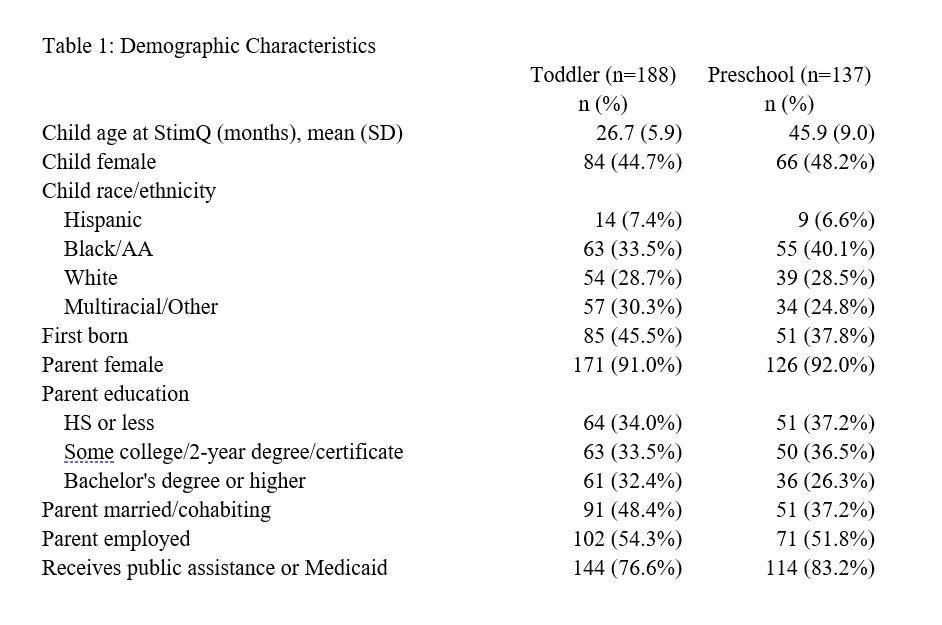
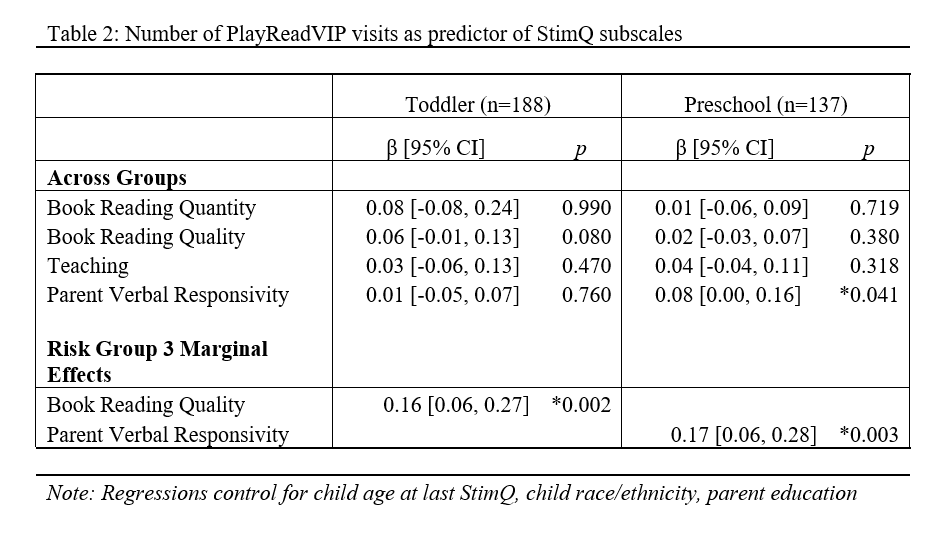
Background: The Pittsburgh Study (TPS) is a population-level intervention initiative that addresses the heterogeneous needs of parents by conducting repeated risk assessments from birth to age 6 and offers a menu of layered services tailored to needs. PlayReadVIP is offered to parents with greater than minimal risk to support early relational health and school readiness by targeting positive parenting practices. In a session, a coach discusses the child's developmental period, provides a toy or book, videorecords parent-child interactions, and provides a real-time strengths-based review of the video with the parent. While PlayReadVIP's impact has been strongly supported in several RCTs, there has been limited study examining dose-response in real-world implementation. Objective: This study evaluates the association between dose of PlayReadVIP and later positive parenting practices in a real-world population-level study across two age groups. Design/Methods: TPS recruited English-speaking parents of children 0-4 years in healthcare and community settings. Families with > minimal risk that chose PlayReadVIP and participated in >1 session were included. Positive parenting practices, including subscales of book reading quantity and quality, teaching, and verbal responsivity were evaluated using the StimQ2 self-report Toddler and Preschool surveys. We conducted regressions predicting the most recent StimQ2 subscale score from PlayReadVIP sessions for each age group. Models were adjusted for key covariates. Exploratory analyses were run within risk group.Our sample included 188 toddler and 137 preschool StimQ2 scores (see Table 1 for demographics). As this is a longitudinal project with enrollment at any age, 96 participants were included in both age groups. Results: In the toddler age group, multiple regression analysis indicated that the number of PlayReadVIP sessions trended towards significance (p=.08) predicting book reading quality across all risk groups. Sub-analyses by risk group indicated that this association is driven by group 3 (p <.05). For preschool, analyses indicated that the number of PlayReadVIP sessions significantly predicted (p <.05) parent verbal responsivity. Sub-analyses by risk group indicated that this, too, was driven by group 3 (p <.05).
Conclusion(s): Findings suggest a linear dose relationship between number of PlayReadVIP sessions parents engaged in and the quality of book reading at the toddler age, and parent verbal responsivity at the preschool age. This suggests that PlayReadVIP offers support in different areas as children age, and specific risk groups may benefit more from ongoing engagement.