








Technology
Session: Technology 3: Telemedicine and Virtual Health

Michelle J. Mejia, MD (she/her/hers)
Clinical Assistant Professor
Seattle Children's Hospital/ University of Washington
Seattle, Washington, United States
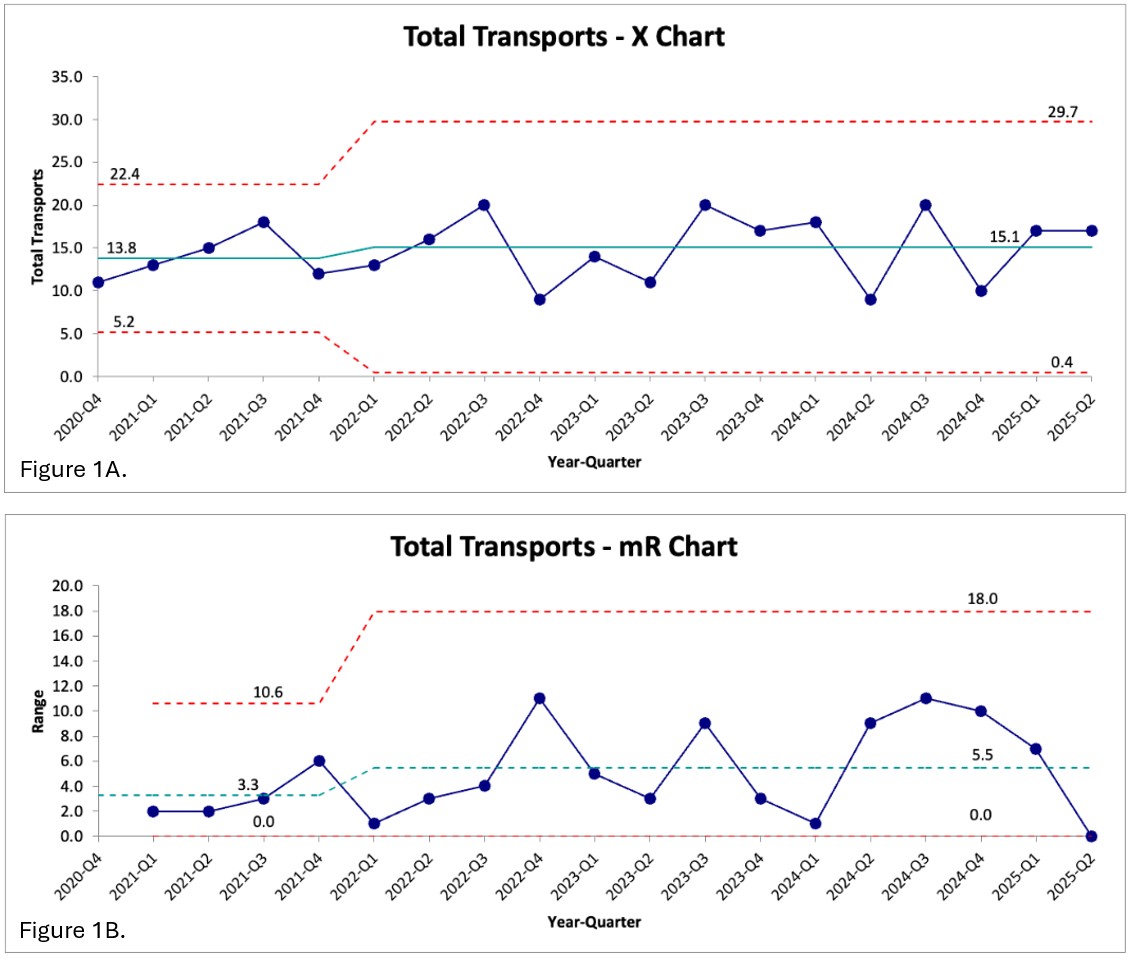 A. Total transports per quarter, average transport volume did not vary significantly from pre-implementation (Q4 2020) to when all three regional sites were participating (Q1 2022), CL 13.8 vs CL 15.1, respectively. Suggesting no change to the total volume of transports. B. Transport variability was seen with the implementation of telehealth consults, average range in between values increased from 3.3 (pre-implementation) to 5.5 (post-implementation). This increased variability suggests more individualized decision-making within triaging of neonatal transports.
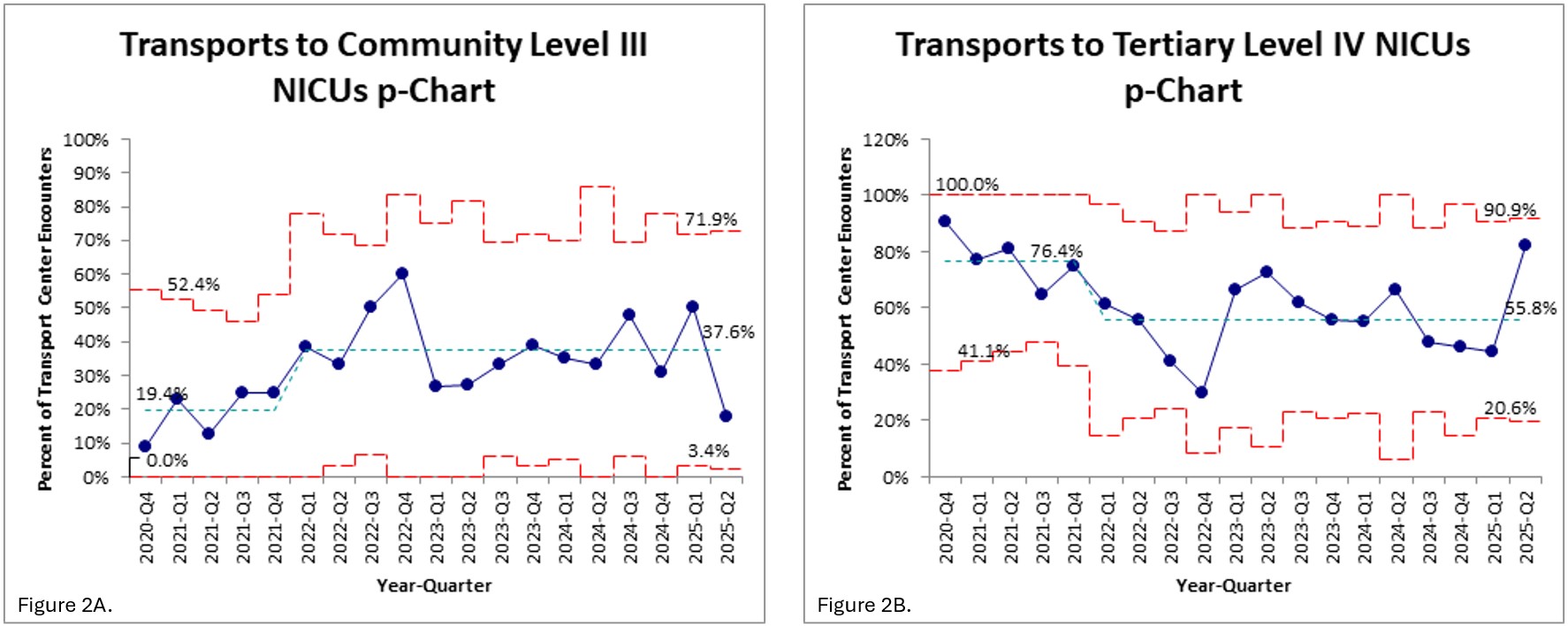 A. The average percentage per quarter of transports directed to community level III NICUs increased, from pre-implementation (Q4 2020) to when all three regional sites were participating (Q1 2022), CL 19.4% vs CL 37.6%. This change appears to be steady with no unstable points or trends identified within the data. B. The average percentage per quarter of transports directed to tertiary level IV NICUs decreased, from pre-implementation (Q4 2020) to when all three regional sites were participating (Q1 2022), CL 76.4% vs CL 55.8%. This change appears to be steady with no unstable points or trends identified within the data.
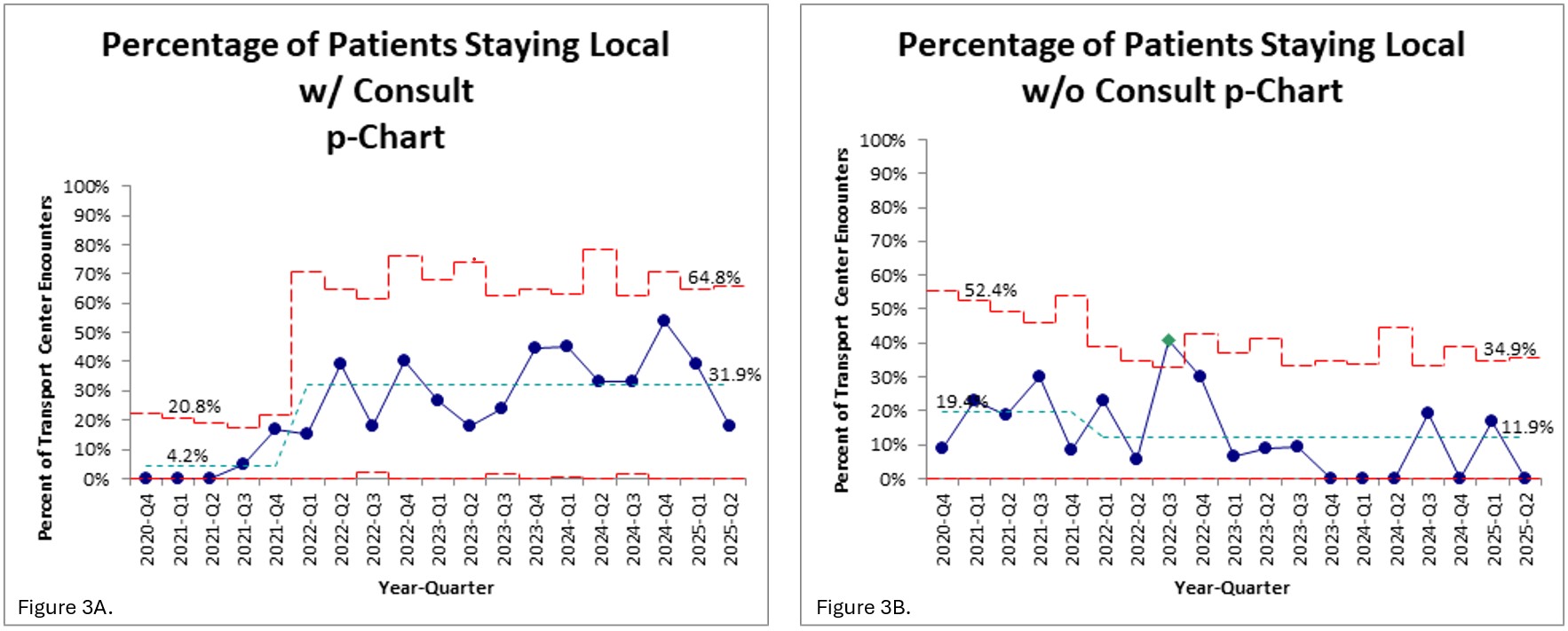 (A) The average quarterly percentage of patients staying locally with a consult increased from pre-implementation (Q4 2020) to full program participation (Q1 2022), from CL 4.2% (UCL 20.8%) to CL 31.9% (UCL 64.8%). This represents a significant and stable process change, as the new centerline exceeds the previous upper control limit with no unstable points or trends.