436 - Parental Use of Online Health Information Prior to Emergency Department Visits: Implications for Equitable Healthcare and Family Decision-Making
Monday, April 27, 2026
8:00am - 10:00am ET
Publication Number: 4427.436
Sharon Smith, University of Connecticut School of Medicine, Hartford, CT, United States; Irena Komninakas, Connecticut Children's Medical Center, Easton, CT, United States
Chief of Undergraduate Research Assistant Program Connecticut Children's Medical Center Easton, Connecticut, United States
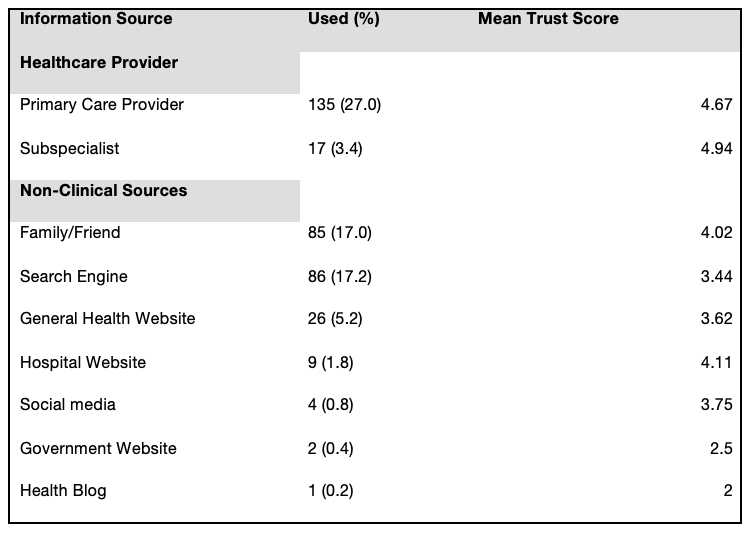
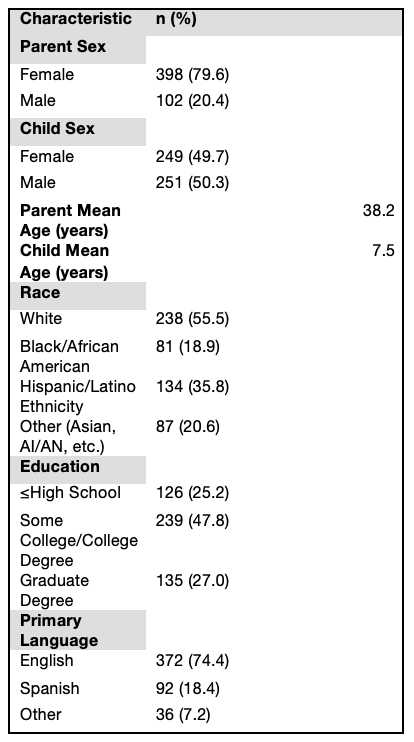
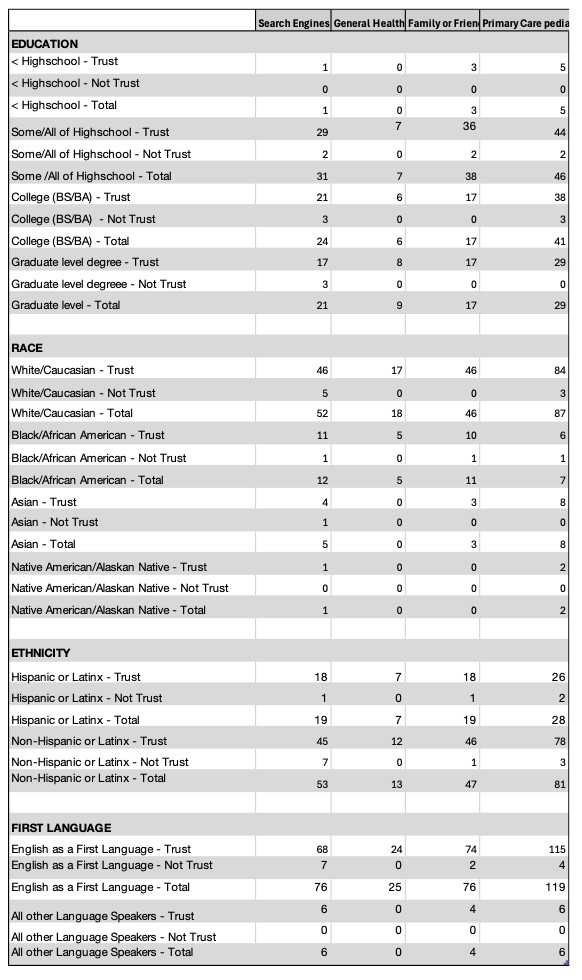
Background: Active patient involvement improves outcomes and satisfaction with care. Increasing reliance on online health information (OHI) may introduce new challenges for the parent-physician interaction. Disparities in education, language, and ethnicity may influence how families interpret and trust digital health resources. Objective: To assess parental use of OHI prior to an emergency department visit for their child and assess the types & trust worthiness of the resources. Design/Methods: A cross-sectional survey of 500 parents who bring their children for emergency care was conducted to assess their trust and behaviors related to OHI. Demographic variables included child age, sex, race, ethnicity, parental education, and primary language. ANOVA and chi-square tests were used to assess differences in responses to statements regarding trust in expert-written websites, verification of sources, communication with primary providers, and decision-making. Results: 500 parents completed the survey with child mean age 7.5, 49.7% female child, 50.3% male child, 79.6% female parent, 20.4% male parent, 18.9% Black, 55.5% White, 35.8% Hispanic (Table 1). Commonly used resources and level of trust before ED visits were the child's primary care provider, general search engines, and a family or friend(Table 2). Parents with graduate-level education had significantly higher trust in websites written by experts than those with less education (P < 0.05); Hispanic parents reported lower trust in expert-written content than non-Hispanic parents (P = 0.0019). Lower-educated parents, conversely, exhibited greater trust in peer-authored content than graduate-level parents (p = 0.016). Graduate degree holders and English-first-language speakers were more likely to check online sources (p,0.001 and p = 0.009, respectively), whereas non-English and non-Spanish speakers checked sources less frequently (p = 0.005). Parents with only a high school education were more likely to follow OHI over physician advice and less likely to consult medical professionals before deciding on care (p < 0.001). Parents who used resources also varied in their levels of confidence in each source (Table 3).
Conclusion(s): Parents were most likely to trust a resource that was recommended by their physician, and most start by looking for health information on a general search engine. Higher educational attainment, English language, white race, and non-Hispanic ethnicity were significantly associated with higher trust in online information. These results indicate that various factors may influence how parents engage with OHI and the medical decision-making process.