Session: Adolescent Medicine 4: Eating Disorders & Mental Health
268 - Piloting a Narrative Medicine Intervention for Adolescents and Young Adults with Anorexia Nervosa
Sunday, April 26, 2026
9:30am - 11:30am ET
Publication Number: 3257.268
Rebecca K.. Tsevat, University of California, Los Angeles David Geffen School of Medicine, Los Angeles, CA, United States; May Lin, University of California, San Francisco, School of Medicine, San Francisco, CA, United States; Sara Buckelew, UCSF Benioff Children's Hospital San Francisco, Oakland, CA, United States; Amanda Downey, University of California San Francisco, San Francisco, CA, United States; Anoushka Sinha, UCSF Benioff Children's Hospital San Francisco, San Francisco, CA, United States
Assistant Professor of Pediatrics UCSF Benioff Children's Hospital San Francisco San Francisco, California, United States
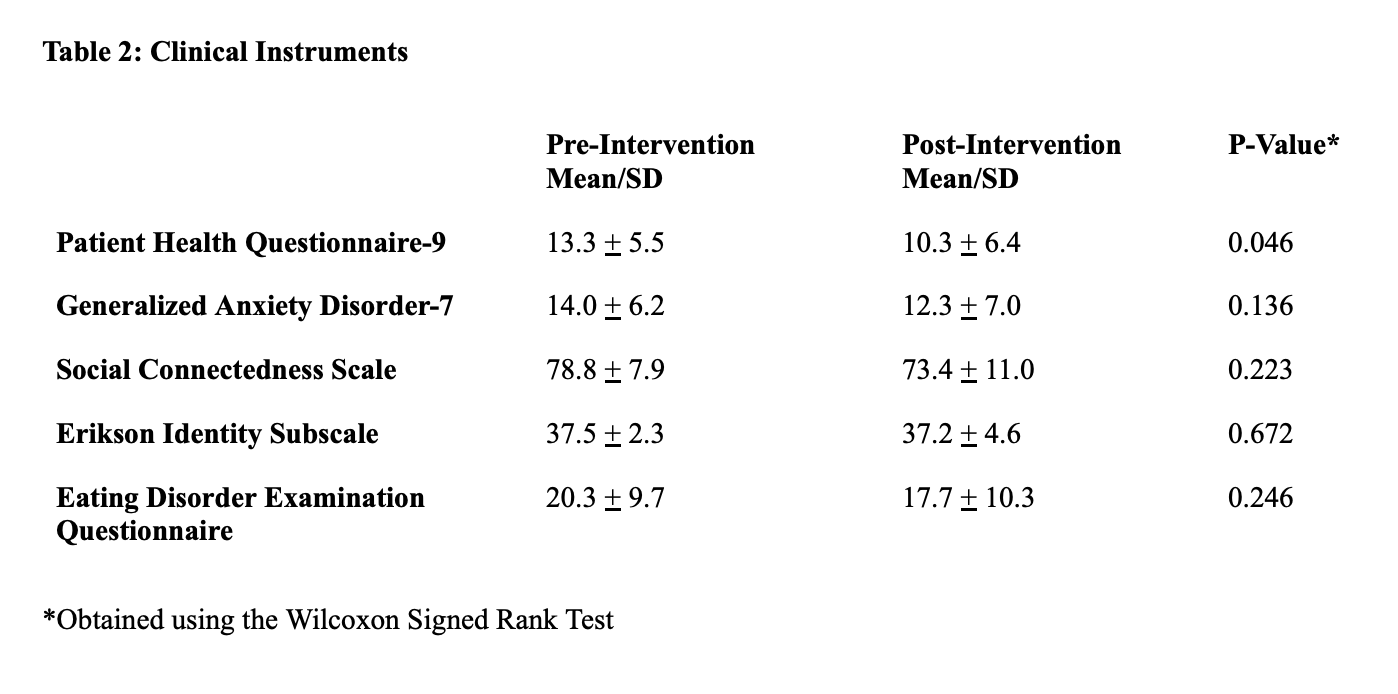
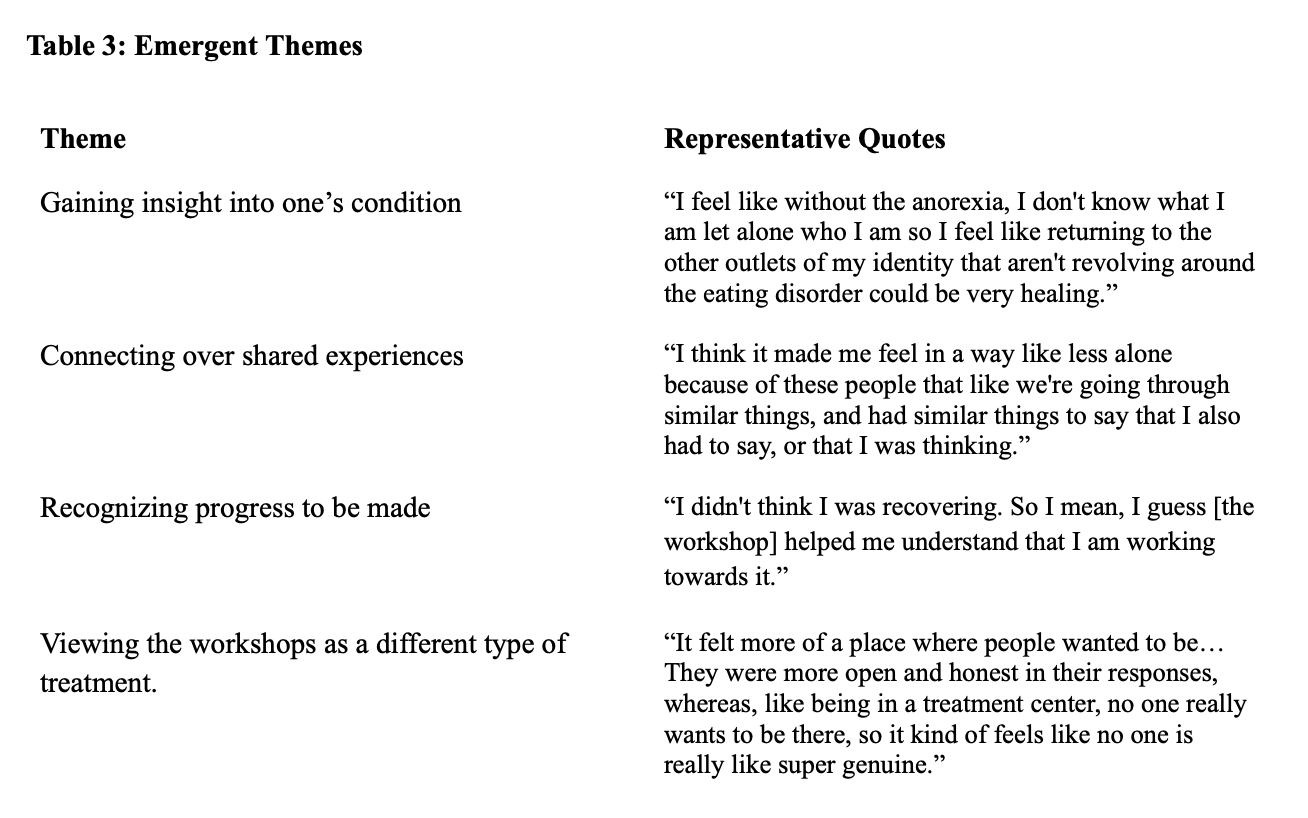
Background: Anorexia Nervosa (AN) is among the most lethal psychiatric conditions, particularly in adolescence. Yet, current treatment models remain focused on weight restoration and symptom reduction, while neglecting identity clarity and social connectedness. Narrative medicine may address these issues by integrating close reading with reflective writing to foster reflection, storytelling, and meaning-making around illness and identity; however, this approach has not been used with adolescents with AN. Objective: This mixed-methods study sought to pilot a narrative medicine (NM) intervention for adolescents and young adults (AYAs) with AN in an outpatient setting. Design/Methods: Participants (ages 16-25) were recruited through flyers distributed at eating disorder clinics and referrals from community providers. Inclusion criteria were being medically stable for outpatient care and actively engaged in outpatient therapy for AN. The intervention consisted of a 6-week workshop series, with themes including identity, embodiment, and resilience. Surveys assessed the acceptability of the intervention, while clinical instruments (Patient Health Questionnaire-9 [PHQ-9], Generalized Anxiety Disorder-7, Social Connectedness Scale, Erikson Identity Subscale, and Eating Disorder Examination Questionnaire) assessed mental health and eating disorder symptoms; Wilcoxon signed-rank tests evaluated differences pre- and post-intervention. Additionally, semi-structured interviews assessed participants' experiences, perceived benefits, and barriers to engagement; thematic analysis identified emergent themes and sub-themes. Results: Eight participants enrolled in the study, and 7 completed the intervention. The mean age of 21 + 4 and the majority identified as female (75%). All participants (100%) found the intervention to be enjoyable, relevant, and well-structured. There was a significant improvement in mean PHQ-9 scores from the beginning to the end of the intervention (13 to 10, p=0.046); however, there were no significant differences in the other clinical measures. In qualitative interviews, 4 themes emerged: gaining insight into one's condition, connecting over shared experiences, recognizing progress to be made, and viewing the workshops as a different type of treatment.
Conclusion(s): This intervention represents a novel application of NM for AYAs with AN. NM was feasible and acceptable to participants, who derived meaning and social connection through the series. Future studies are needed to expand the intervention to larger, more diverse populations and to further elucidate clinical outcomes and mechanisms for change.










.png)