145 - Standardized Bilirubin Phototherapy Systems (SBPS): A Metrology- Driven Platform for Accurate, Real-Time Irradiance Measurement in Neonatal Phototherapy
Sunday, April 26, 2026
9:30am - 11:30am ET
Publication Number: 3139.145
Mahesh L. Sampat, Children's Health, Lakewood, CA, United States
Owner Children's Health Lakewood, California, United States
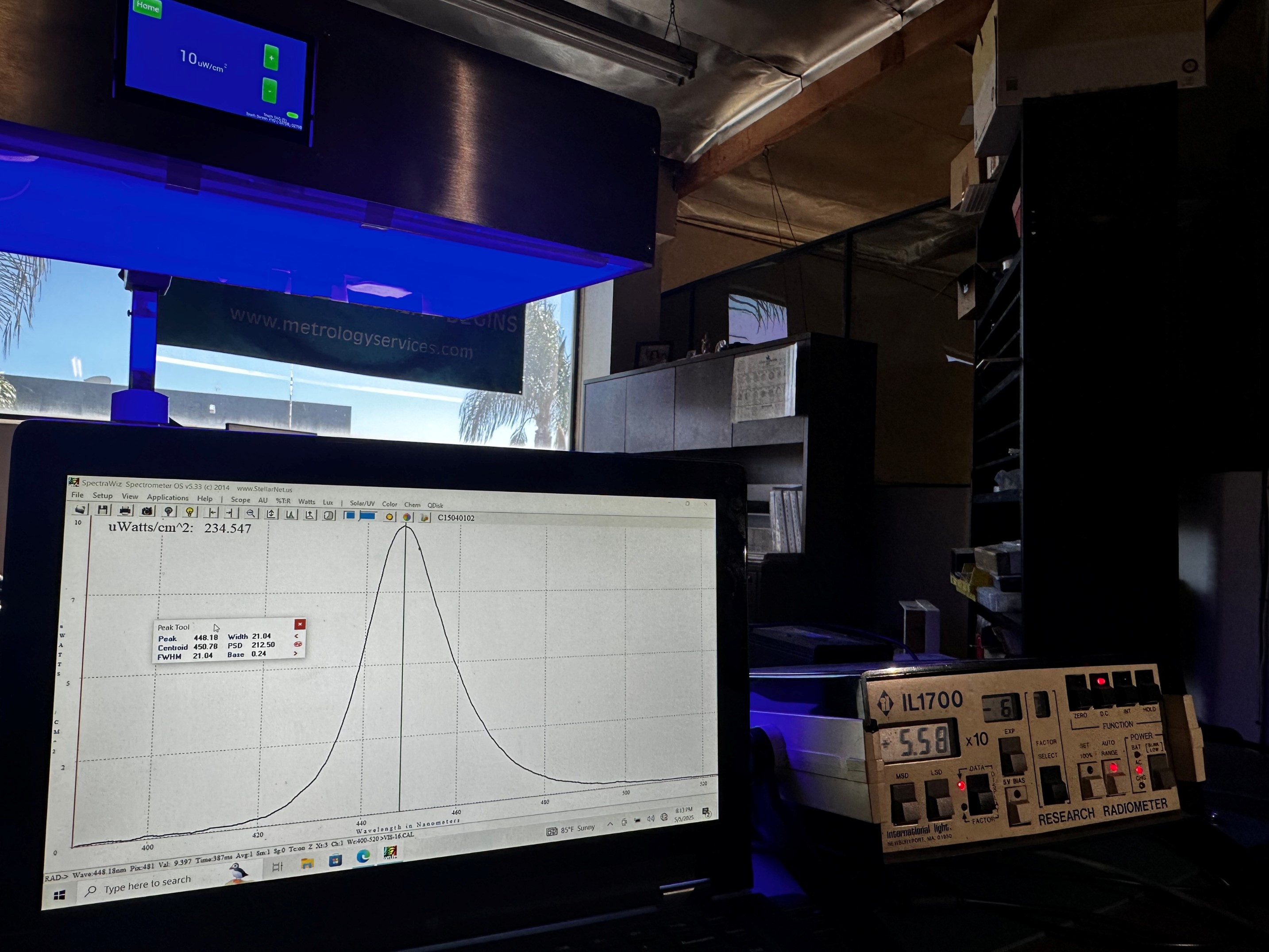
Background: Neonatal phototherapy remains the standard intervention for hyperbilirubinemia, but persistent variability in delivered irradiance-and inadequate tools for real-time measurement and documentation-limit optimization of treatment. The American Academy of Pediatrics (AAP) technical reports and recent commentary (e.g., "Neonatal Phototherapy-The Need to Measure and Document", JAMA Pediatrics, 2024) highlight the unmet research need for cost-effective systems that reliably measure and document spectral irradiance in clinical settings. Objective: To develop and validate a Standardized Bilirubin Phototherapy System (SBPS) that leverages metrology-grade irradiance measurement, spectrally matched LED sources, and real-time feedback control to support the AAP-identified research need for accurate measurement and documentation of phototherapy irradiance. Design/Methods: The SBPS prototype combines three key elements:
1. A uniform irradiance field generated via integrating-sphere-inspired optics with a calibrated 475 nm narrowband LED source, designed for neonatal phototherapy wavelengths.
2. A radiometer (Patent Pending) with a spectrally matched narrowband sensor (rather than a broadband spectral filter) for accurate irradiance measurement under LED sources.
3. A microcontroller-based closed-loop algorithm that receives transcutaneous bilirubin (TcB) input and dynamically adjusts LED output to maintain target irradiance levels. Bench testing was conducted using NIST-traceable spectroradiometric calibration to assess spectral uniformity, irradiance accuracy, and control stability. Results: Preliminary instrumentation data demonstrate > 95% spatial uniformity across the treatment zone and measured irradiance error of less than ±2% within the 475 ±5 nm therapeutic band. The closed-loop feedback system maintained set-point irradiance within ±5% over continuous long-duration operation. These results indicate the SBPS meets the AAP-identified need for a system capable of cost-effective, accurate, real-time measurement and documentation of spectral irradiance in neonatal phototherapy.
Conclusion(s): The SBPS presents a new metrology-aware platform that aligns with the research priorities outlined by the AAP and recent expert commentary. By enabling precise, real-time measurement and documentation of spectral irradiance, the SBPS has the potential to standardize neonatal phototherapy dosing, support research studies, and ultimately enhance clinical safety and effectiveness of treatment.