Clinical Research Fellow Cleveland Clinic Children’s Cleveland, Ohio, United States
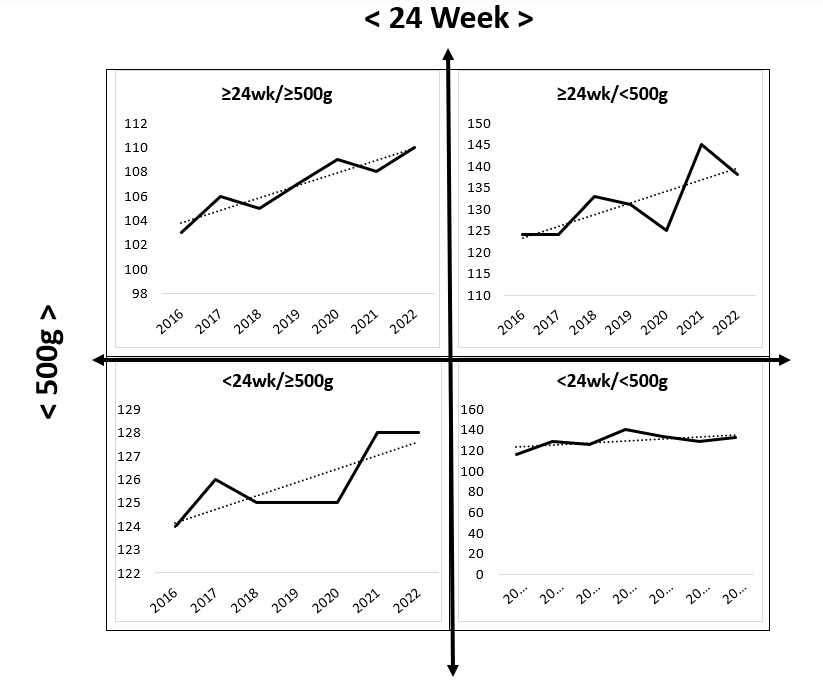
Background: Extremely preterm infants born at ≤25 weeks gestation and weighing < 750g represent a high-risk population at the edge of viability. Advances in neonatal care have improved survival, but these infants often experience prolonged and complex hospitalizations. Understanding the factors that influence their length of stay (LOS) is crucial for resource allocation and family counseling. Objective: To examine differences in length of stay (LOS) in subcategories of extremely preterm infants born at ≤25 weeks gestational age (GA) and < 750g birth weight (BW). Design/Methods: We used the National Inpatient Sample (NIS) datasets produced by the Healthcare Costs and Utilization Project (HCUP) for the years 2016-2022. Hospital discharge records capture demographic, clinical encounters and procedures done using the international classification of Diseases - Version 10 (ICD-10). For this analysis, we excluded infants diagnosed with severe congenital anomalies such as central nervous system (CNS) anomalies, severe congenital heart diseases (CHD), lung anomalies, congenital diaphragmatic hernias (CDH), abdominal wall defects (AWD) including gastroschisis or omphaloceles, infants with cystic dysplastic kidneys, hydrops fetalis, complex congenital anomalies, and common trisomy disorders. We excluded infants < 23 weeks GA, infants transferred out of the birth hospital, and infants expired during hospitalization. We created 4 distinct groups: Infants < 24wk and < 500g, < 24wk and ≥500g, ≥24wk and < 500g, and ≥24wk and ≥500g. The frequency of infants in each group was calculated, and LOS was compared between groups. Results: Sample included 28,510 infants. Table (1) depicts the frequencies and percentages of infants categorized by GA and BW. The LOS was the least in infants ≥24wk and ≥500g and was statistically significant compared to all other groups. There were no differences between the other groups, see Table (1). The median LOS significantly increased over recent years, Fig 1.
Conclusion(s): Despite recent advances in neonatal management, the length of stay in extremely preterm infants remained high, it increased with decreased GA and BW, and steadily increased over the years. The increased LOS over the years could be related to improved survival.
Table (1): Median length of hospital stay in extremely preterm infants by gestational age and birth weight
Figure (1): Change in median length of hospital stay in extremely preterm infants by gestational age and birth weight over the years










.png)