562 - The 12-year Dynamic Epidemiology of Pediatric Rhinovirus/enterovirus (RV/EV)-associated Refractory Wheezing Illness. Metropolitan Atlanta, Georgia. 2013-2024.
Saturday, April 25, 2026
3:30pm - 5:45pm ET
Publication Number: 2547.562
Sujit Sharma, Children's Healthcare of Atlanta, Roswell, GA, United States; Carlos A.. Delgado, PEMA/ Children's Healthcare of Atlanta, Suwanee, GA, United States
Section Director Division of Emergency Medicine Children's Healthcare of Atlanta Roswell, Georgia, United States
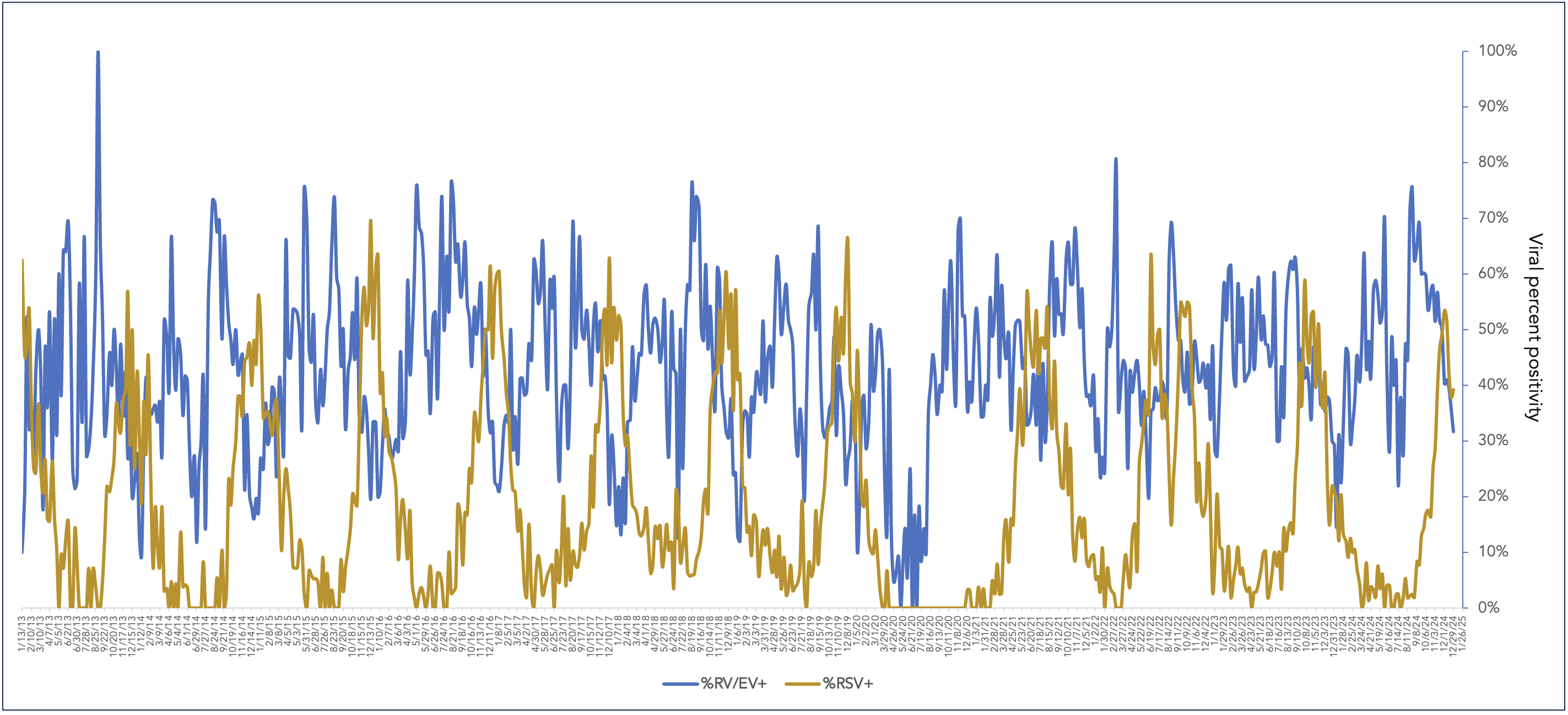
Background: Viral-triggered refractory wheezing illness (RWI) - including bronchiolitis and acute asthma exacerbation - is one of the most frequent causes of hospitalizations in children. While RV/EV-associated RWI is increasingly recognized as clinically relevant, the burden of RV/EV-associated RWI is not well established. High flow nasal cannula (HFNC) therapy has gained popularity as a non-invasive intervention to offset the increase in resistive work of breathing associated with RWI in children. Objective: Determine overall influence of RV/EV-associated RWI (vis-à-vis HFNC utilization) in comparison to RSV-associated RWI within a large pediatric quaternary care system providing more than 90% of inpatient care for a metropolitan population of 1 million children and compare longitudinal trends during pre- and post-pandemic periods. Design/Methods: We retrospectively reviewed electronic medical records to identify weekly (Mon-Sun) total HFNC visits and identified those visits during which multiplex nasopharyngeal respiratory viral panel (RVP) PCR testing was performed. We have quantified the volume of total HFNC visits, HFNC visits with RVP testing/results, and provided a descriptive analysis of longitudinal trends in RV/EV and RSV positivity. Co-infections were included in our RVP data, and those visits associated with a pneumonia diagnosis were excluded, in order to narrow our focus on RWI pathophysiology. We divided our study period into two parts: pre-pandemic (1/7/2013-3/15/2020) and post-pandemic (3/16/2020-12/29/2024). Results: During the 12-year (625-week) study period (1/7/2013-12/29/2024), there were 61,632 HFNC visits meeting the inclusion criteria. RVP collection was performed during 33,142 (53.8%) of these HFNC visits (Figure 1). During the entire study period among 33,132 RVPs collected: 14,393 (43.4%) were RV/EV positive; 7,877 (23.8%) were RSV positive (Figure 2). During the pre-pandemic period, the weekly median (IQR) positivity for RV/EVs was 41.7% (32.5-52.1) and 14.6% (6.2-33.1) for RSV. During the post-pandemic period, the weekly median (IQR) positivity for RV/EVs was 43.9% (36.4-53.9) and 8.2% (2.2-23.3) for RSV.
Conclusion(s): RV/EV positivity among patients with RWI who underwent RVP testing was twice as a high as RSV positivity. The burden of RWI associated with RV/EV was stable across the pre- and post-pandemic periods, while the proportion of RWI caused by RSV trended down during the post-pandemic period. Additionally, during the post-pandemic period, RV/EV and RSV demonstrated a capacity for heightened co-circulation patterns, in comparison to the pre-pandemic period
Figure 1. Weekly HFNC visits and HFNC visits with RVP testing completed. 2013 through 2024.
Figure 2. Weekly positivity of RV/EV and RSV among HFNC visits that underwent RVP testing. 2013 through 2024.
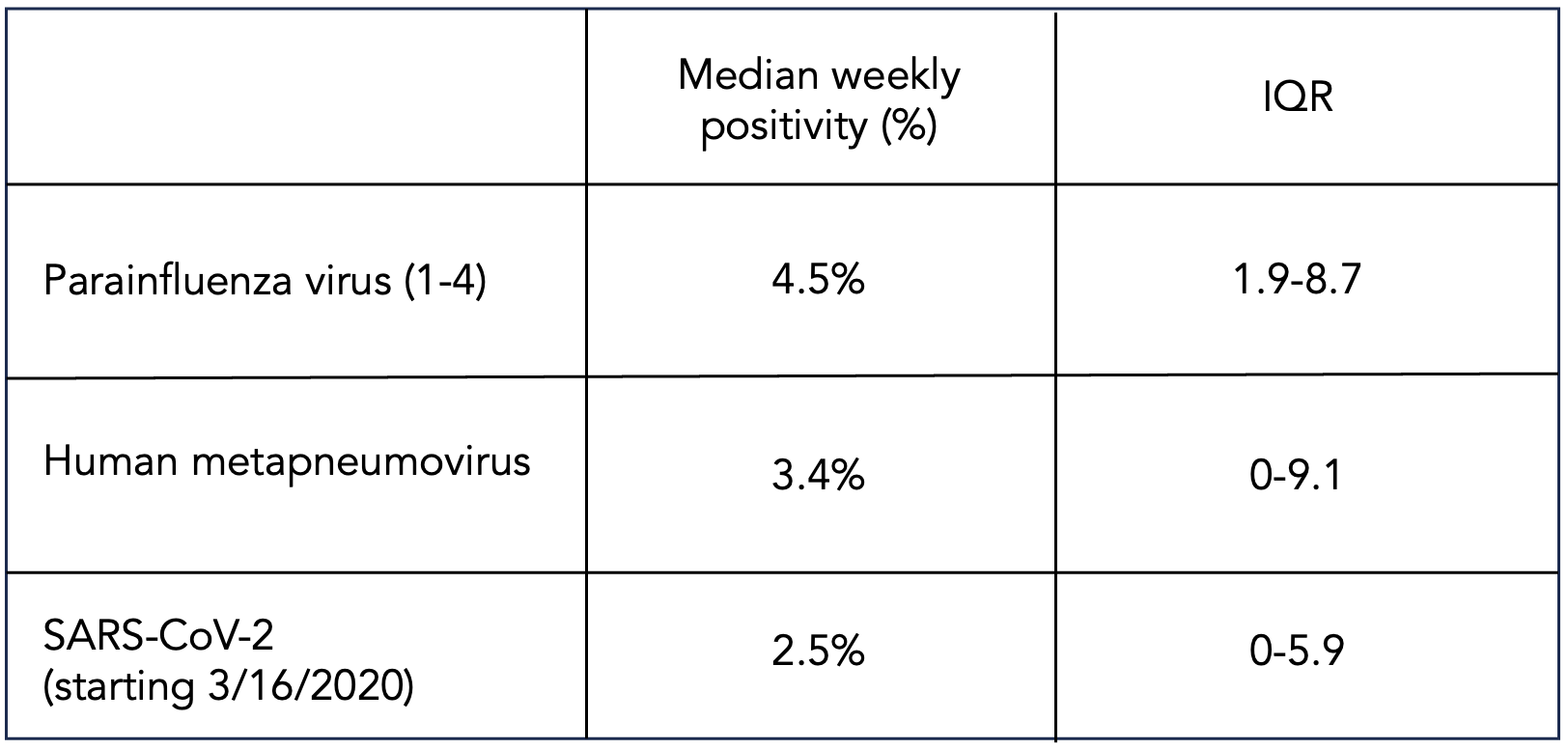
Table. Median weekly positivity of other viral pathogens among HFNC visits that underwent RVP testing. 2013 through 2024.










.png)