509 - Integration of Ambulatory Care Pharmacists into a Multidisciplinary Care Team for Children with Medical Complexity
Friday, April 24, 2026
5:30pm - 8:00pm ET
Publication Number: 1489.509
Jena Jastrow, Children's Wisconsin, Oak Creek, WI, United States; Jessica Schnell, Medical College of Wisconsin, Milwaukee, WI, United States; Sara Petre, Medical College of Wisconsin, Milwaukee, WI, United States; Tanner Kowalski, Children's Hospital of Wisconsin, 6943 S North Cape Rd, WI, United States
Pharmacist Children's Wisconsin Oak Creek, Wisconsin, United States
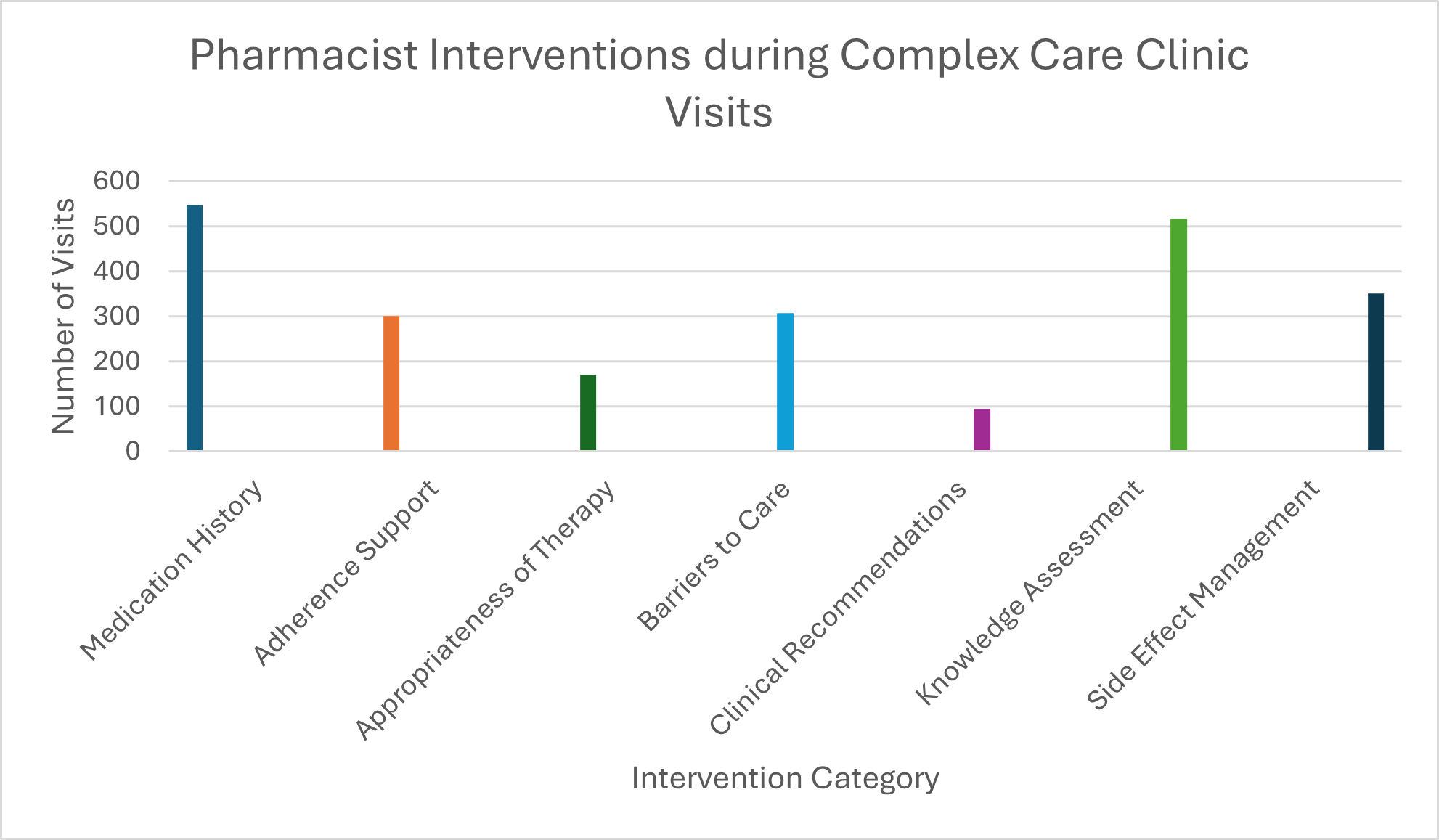
Background: Ambulatory care pharmacy is a growing field with demonstrated benefit in clinical programs including diabetes, cardiology, infectious disease, and pulmonology. Caregivers of children with medical complexity (CMC) manage complex medication regimens at home, involving high numbers of medications, numerous administration times, alternative routes of administration requiring dosage form manipulation, and high-risk medications. Parental understanding and ability to navigate these complex medication regimens is critical to safe medication administration. The Complex Care program at Children's Wisconsin began integrating pharmacy services into biannual clinic visits in 2023. Objective: To evaluate the prevalence and types of pharmacist interventions for CMC during Complex Care clinic visits. Design/Methods: Retrospective chart review identified pharmacist interventions documented in clinic notes from August 1, 2023 to August 30, 2024. Information recorded included: intervention type, details, and polypharmacy concern. Intervention types included knowledge assessments, clinical recommendations, adherence support, barriers to care, side effects, appropriateness of therapy, and medication histories completed. Results: Pharmacists were included in 547/1,051 (52%) of in-person visits. Medication histories were performed and documented at every visit. The most common pharmacist intervention was performing knowledge assessments and completing medication teaching (516 visits; 94.3%). Side effect management was addressed at 351 visits (64.2%), barriers to care at 308 (56.3%), and adherence support at 301 (55%) visits. Appropriateness of therapy was discussed at 170 (31%) and clinical recommendations resulting in medication regimen changes such as dose recommendations, drug discontinuation or initiation, and weans/titrations occurred 95 times (17.4%). Polypharmacy was identified in 212 patients with at least two pharmacies utilized (38.8%).
Conclusion(s): Pharmacists offer a variety of interventions during clinic visits within a complex care program. Interventions provided benefitted CMC and their families by addressing knowledge gaps, providing information on management of side effects, and offering opportunities to simplify medication regimens. Ambulatory pharmacists also benefit complex care providers by making clinical recommendations for changes to dosing, administration, or medication timing, as well as addressing barriers to adherence or pharmacy access. Next steps include investigating the prevalence of polypharmacy and assessing patient satisfaction of pharmacy services provided.
Figure 1: Pharmacist Interventions During Complex Care Clinic Visits