524 - Patterns of Social Vulnerability and their Associations with Care Experience and Socioecological Outcomes in Caregivers of Children with Medical Complexity
Friday, April 24, 2026
5:30pm - 8:00pm ET
Publication Number: 1504.524
Madeline R. Horan, Wake Forest School of Medicine of Wake Forest Baptist Medical Center, Winston-Salem, NC, United States; Savithri Nageswaran, Wake Forest University School of Medicine, Winston-Salem, NC, United States
Assistant Professor Wake Forest School of Medicine of Wake Forest Baptist Medical Center Winston-Salem, North Carolina, United States
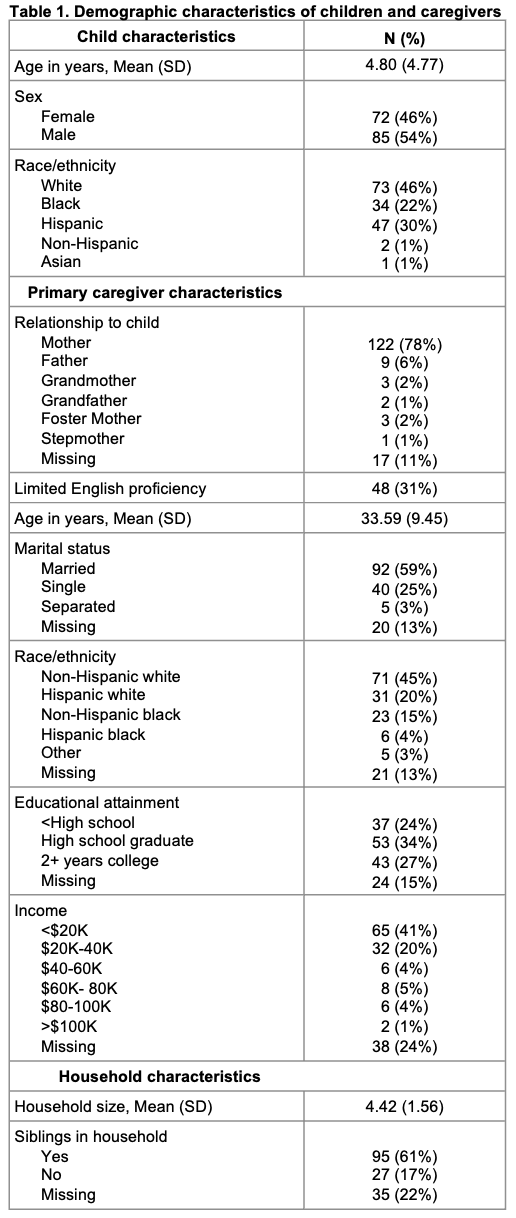
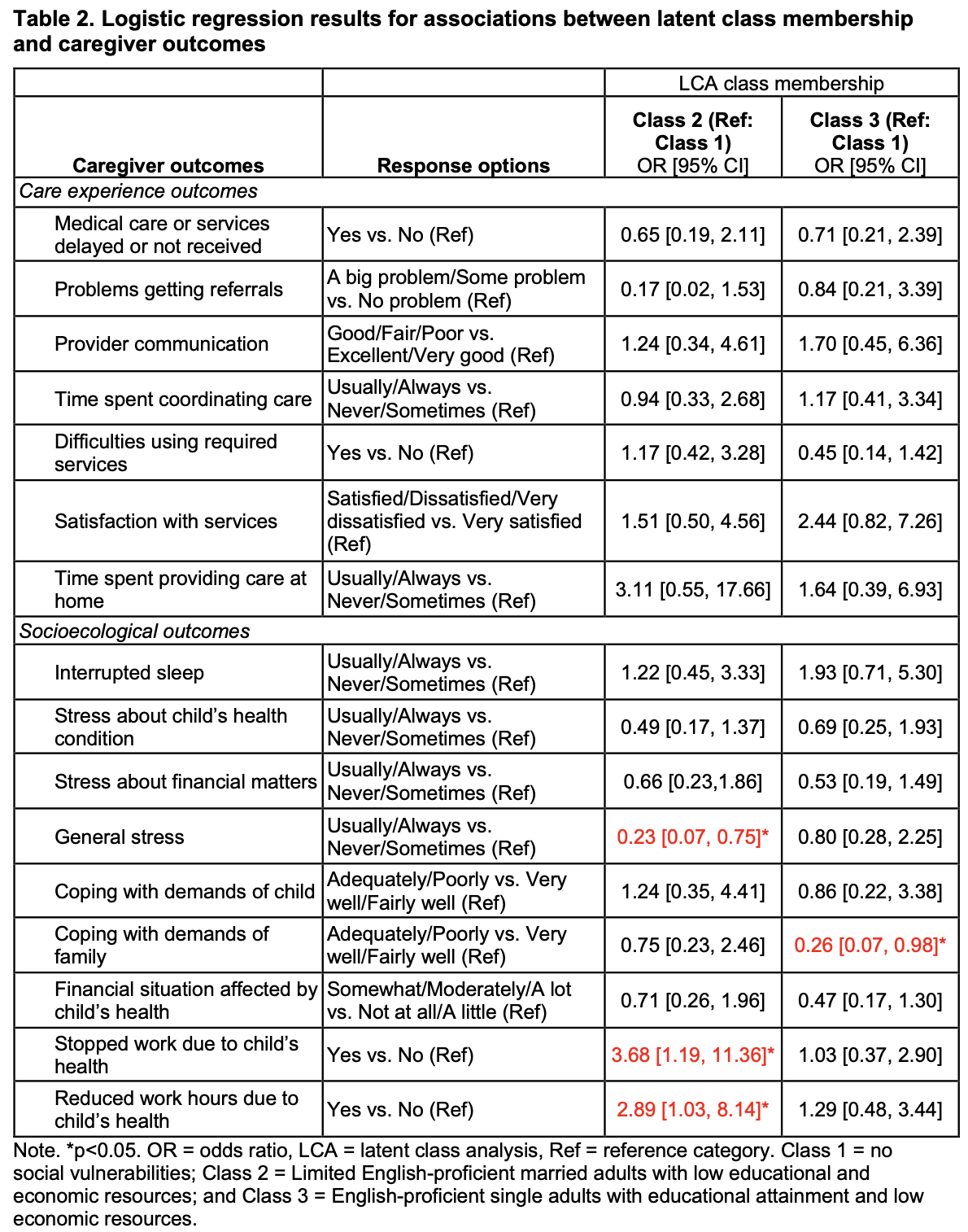
Background: Caregivers of children with medical complexity (CMC) face substantial stress and family impact, but social vulnerability patterns among these caregivers are not well understood. Objective: To identify social vulnerability profiles of caregivers of CMC and examine their associations with caregiver care experience and socioecological outcomes. Design/Methods: We conducted latent class analysis (LCA) using survey data from 157 caregivers of CMC (2010 to 2020) enrolled in a community-based care coordination program of a tertiary care children's hospital. Indicators included limited English proficiency (LEP), education (< high school education), household income ( <$20K), and marital status (single/separated). Three classes emerged (Fig.1): Class 1: no social vulnerabilities (28%); Class 2: LEP married adults with low educational and economic resources (30%); and Class 3: English-proficient single adults with educational attainment and low economic resources (42%). Logistic regression models assessed associations between class membership and care experience (e.g., coordination, referrals) and socioecological outcomes (e.g., stress, employment; Table 1). Models controlled for caregiver age, relationship to child, household size, and presence of siblings. Results: Caregivers were on average 33.6 years old (SD=9.5) and primarily mothers (Table 1). Care experience outcomes were not different in the three classes. Four socio-ecological outcomes were significantly associated with class membership (Table 2). Caregivers in Class 2 were less likely than Class 1 to report being usually or always stressed (odds ratio [OR]=0.23, 95%CI=0.07-0.75). Caregivers in Class 3 were less likely than Class 1 to report coping adequately or poorly (OR=0.26, 95%CI=0.07-0.98). Caregivers in Class 2 were more likely than Class 1 to report stopping work (OR=3.68, 95%CI=1.19-11.36) or reducing work hours (OR=2.89, 95%CI=1.03-8.14).
Conclusion(s): Distinct social vulnerability profiles among caregivers of CMC are differentially associated with stress, coping, and employment, but not care experiences. Caregivers without social vulnerabilities reported more stress than LEP married caregivers with low education and income and worse coping than English-proficient single caregivers. LEP married caregivers with low education and income experience greater employment disruptions than caregivers without social vulnerabilities. Tailored interventions addressing language, education, and economic barriers are needed to support caregiver socioeconomic well-being.
Figure 1. Marginal means of social vulnerability indicators by latent class among caregivers of children with medical complexity
Table 1. Demographic characteristics of children and caregivers
Table 2. Logistic regression results for associations between latent class membership and caregiver outcomes









.png)