502 - Peer-Led Parent Cafes to Enhance Resilience and Coping Among Caregivers of Children with Medical Complexity: A Qualitative Study
Friday, April 24, 2026
5:30pm - 8:00pm ET
Publication Number: 1482.502
Nathaniel D. Bayer, University of Rochester, Golisano Children’s Hospital, Rochester, NY, United States; Jennifer Johnson, University of Rochester, Golisano Children's Hospital, Rochester, NY, United States; Chastity Henry, Golisano Children's Hospital at The University of Rochester Medical Center, Rochester, NY, United States; Jan Schriefer, Golisano Children's Hospital at The University of Rochester Medical Center, Rochester, NY, United States; Suzannah Iadarola, University of Rochester School of Medicine and Dentistry, Rochester, NY, United States; Thomas G. O'Connor, University of Rochester Medical Center, Rochester, NY, United States; Dennis Kuo, University of Rochester School of Medicine and Dentistry, Rochester, NY, United States; Christie Petrenko, Mt. Hope Family Center, University of Rochester, Rochester, NY, United States
Associate Professor of Pediatrics University of Rochester, Golisano Children’s Hospital Rochester, New York, United States
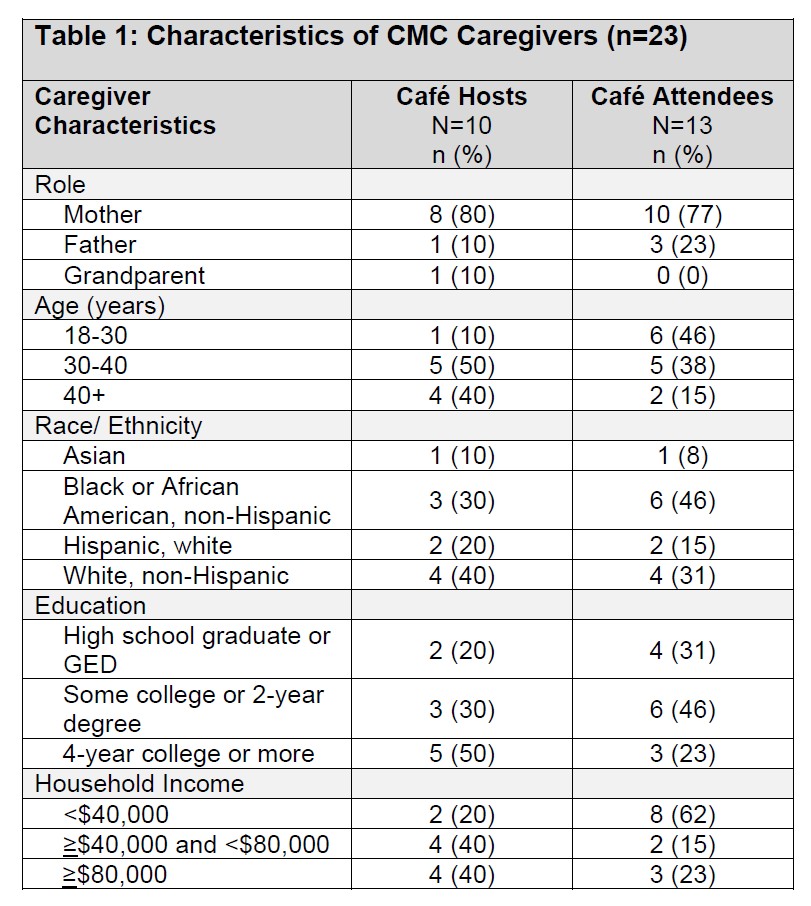
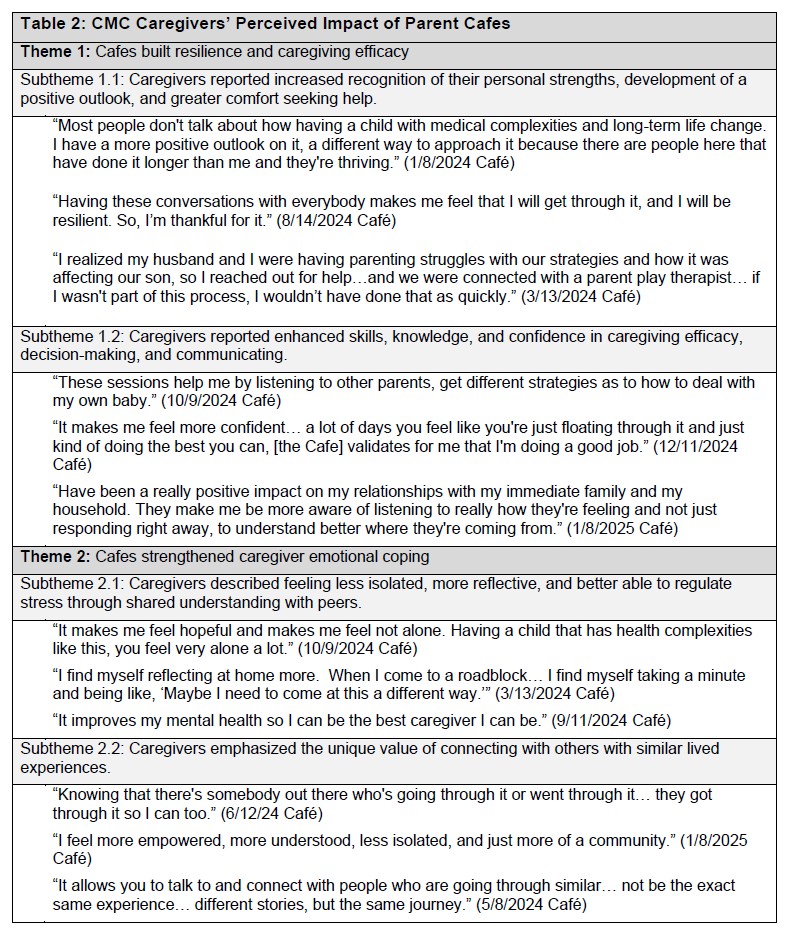
Background: Caregivers of children with medical complexity (CMC) experience substantial challenges in their caregiving roles. Peer-led, group-based support interventions have shown promise for promoting caregiver resilience, yet few have been adapted or tested for this population. Objective: To examine CMC caregiver perceptions of the impact of Parent Cafes-a peer-led support intervention-on their resilience. Design/Methods: We conducted a proof-of-concept qualitative study of Parent Cafes with caregivers of CMC at a children's hospital. Cafe sessions were hosted by trained CMC caregiver peers who facilitated structured conversations designed to strengthen caregiver reflection, connection, and self-efficacy. Café Hosts were experienced CMC caregivers (2+ years of caregiving), who were trained in collaboration with our community partner. We conducted monthly Cafes in person and virtually over one year. After each session, we conducted semi-structured focus groups to elicit feedback regarding the session and perceived impact on resilience. Focus groups were recorded and transcribed. We used iterative coding and interpretative analysis to identify themes using team consensus and a phenomenological approach. We enhanced credibility of our findings by including a CMC caregiver co-author in the analysis and through triangulation with a CMC caregiver advisory group. Results: We conducted 12 Cafes (5 in person, 7 virtual) from 3/2024 to 2/2025. Twenty-three caregivers (18 mothers, 4 fathers, 1 grandparent) of 20 distinct CMC participated (10 hosts, 13 attendees; Table 1). All CMC had developmental delays and used medical devices (e.g., feeding tube, tracheostomy, etc.). Two themes emerged regarding perceived impact (Table 2). Theme 1 was Cafes built resilience and caregiving efficacy. Participants increasingly recognized their personal strengths, became more comfortable seeking help, and gained skills and confidence in caregiving decisions (Subthemes 1.1 and 1.2). Theme 2 was Cafes strengthened caregiver emotional coping. Caregivers described feeling less isolated, more reflective, and normalized stress through shared understanding among peers (Subthemes 2.1 and 2.2).
Conclusion(s): CMC caregivers perceived Parent Cafes supported their resilience and coping. Findings support a conceptual fit of Parent Cafes for this population and justify further testing of their efficacy to improve caregiver resilience outcomes in a randomized controlled trial.
Table 1: Characteristics of CMC Caregivers
Table 2: CMC Caregivers' Perceived Impact of Parent Cafes